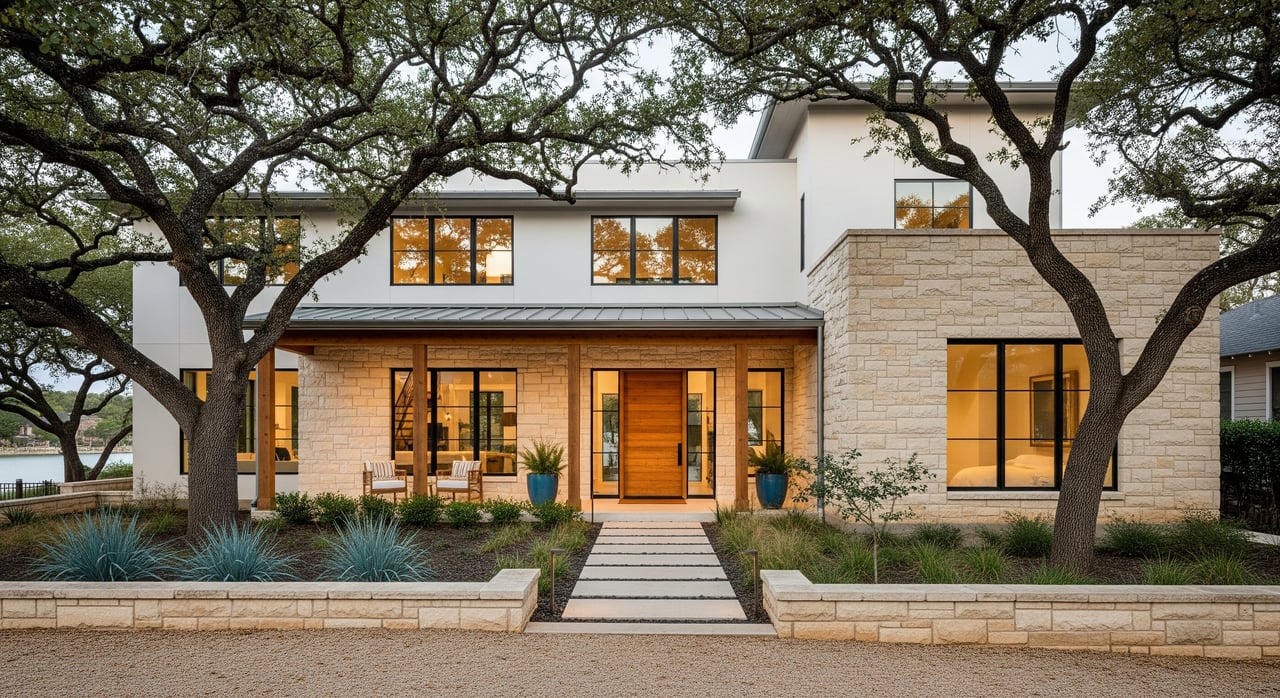
You are not just buying a home in Tarrytown. You are choosing a design story that will shape daily life. From storybook Tudor facades to glassy mid-century lines and bold contemporary builds, the neighborhood’s architecture offers plenty to admire and a few things to watch. In this guide, you will learn how to spot each style on tour, what upgrades make sense, and which inspection items deserve extra attention. Let’s dive in.
Why Tarrytown draws design lovers
Tarrytown sits just west of downtown Austin and east of Lake Austin, in ZIP 78703. You will find mature trees, deep lots, and a mix of early 20th-century revival homes, mid-century residences, and newer infill construction. Some streets feel timeless with original cottages, while others showcase thoughtful renovations or new builds that lean modern. Because some parcels slope toward creeks or the lake, drainage, grading, and floodplain status are worth verifying at the property level.
How to spot classic Tarrytown styles
Tudor Revival
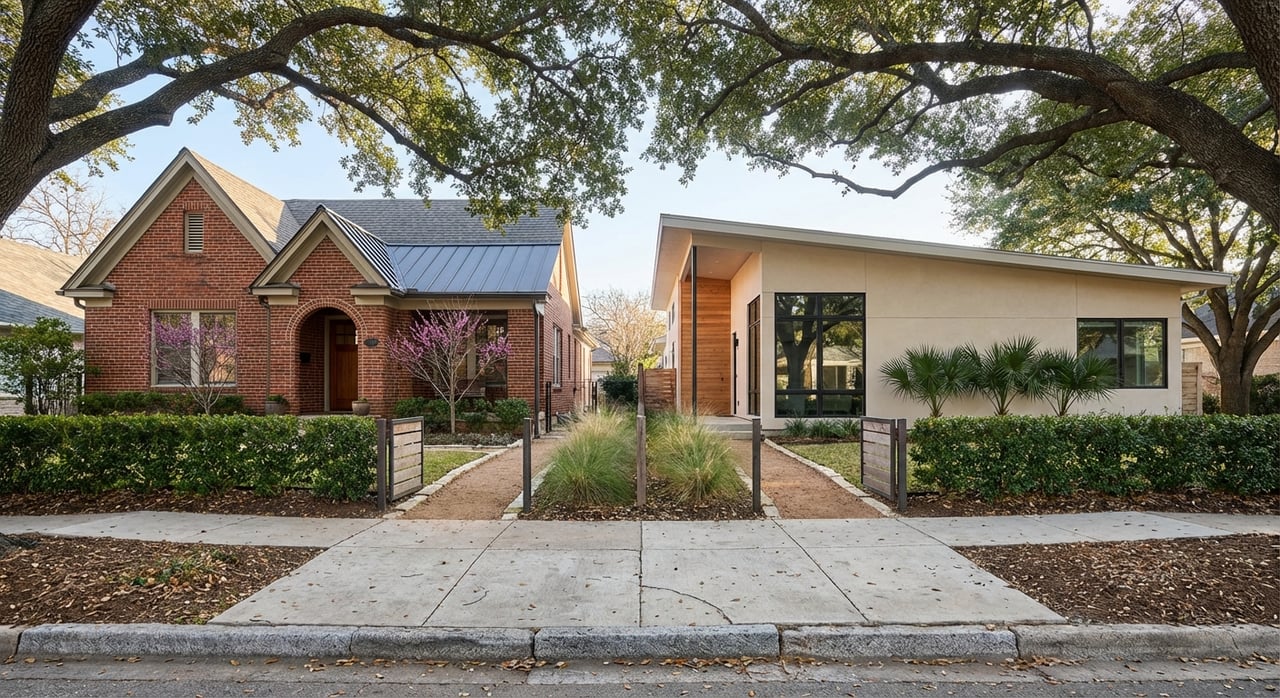
- Identifying cues: Steep, multi-gabled roofs, decorative half-timbering, tall narrow windows, and prominent chimneys. Entries may be arched or recessed with an asymmetrical facade.
- Interior cues: More compartmentalized original layouts with plaster details, exposed beams, and built-ins.
- Renovation potential: Many owners open interior walls to create larger living areas while preserving exterior character. Kitchens and baths are common update targets.
- Inspection watch-outs: Complex roof transitions can hide leaks. Check chimney mortar and flue condition, stucco or masonry moisture issues, and electrical updates if the home retains older wiring.
Colonial Revival and related revival styles
- Identifying cues: Symmetrical front elevations, centered entry with portico or pediment, multi-pane double-hung windows, and classical trim.
- Interior cues: Central hall concepts and defined formal rooms.
- Renovation potential: Strong candidates for restoration with tasteful rear additions that respect the street-facing facade.
- Inspection watch-outs: Original single-pane windows can be drafty. Look for trim or plaster repairs that might conceal water or pest damage.
Craftsman and Bungalow
- Identifying cues: Low-pitched gabled roofs with wide eaves and exposed rafter tails, deep front porches with tapered square columns.
- Interior cues: Cozy open areas with built-in cabinetry and warm woodwork.
- Renovation potential: Highly prized for character. Modernize kitchens and baths while keeping original wood details and hardwoods.
- Inspection watch-outs: Porch foundation settlement, crawlspace moisture, and possible termite or rot at exposed elements. Very early homes may have knob-and-tube or cloth wiring.
Mid-century Modern and Modernist Ranch
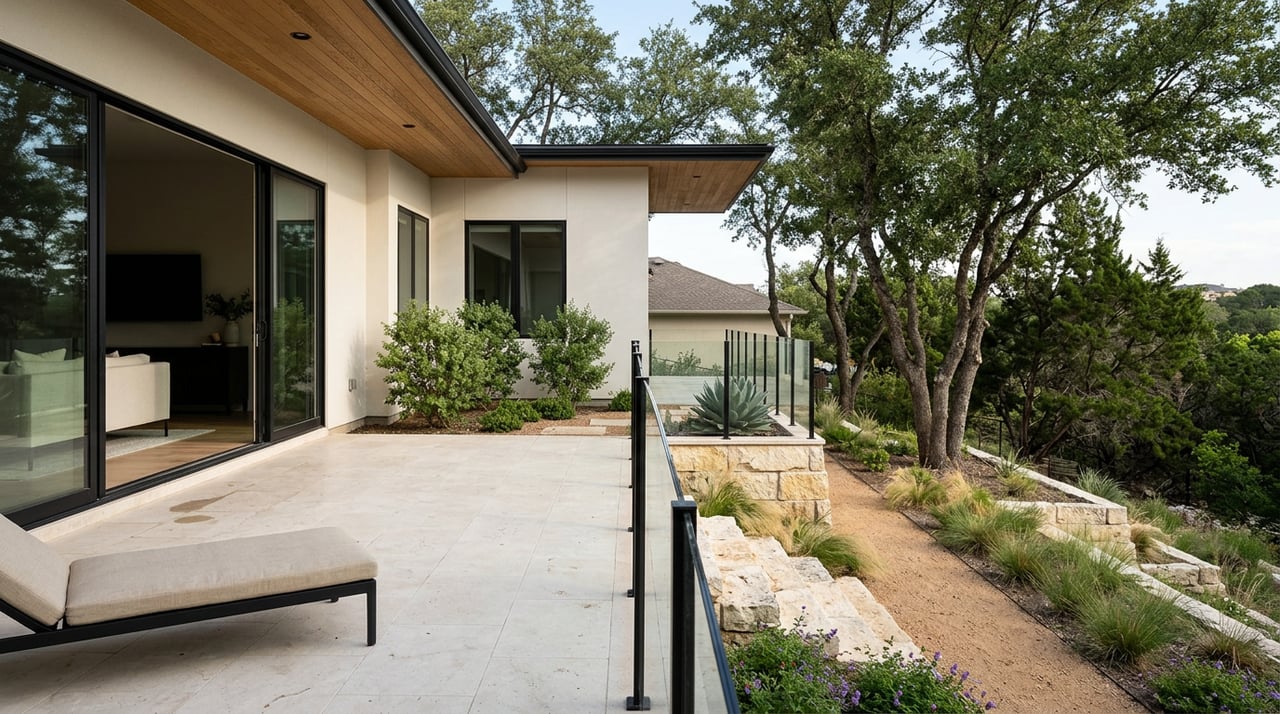
- Identifying cues: Low, horizontal lines, wide eaves, large panes of glass, and flat or low-slope roofs. Carports are common.
- Interior cues: Open plans with strong indoor-outdoor flow, exposed beams, and floor-to-ceiling windows.
- Renovation potential: Upgrading kitchens, baths, HVAC, and insulation while honoring clean planes and openness works well.
- Inspection watch-outs: Low-slope roofs are prone to leaks. Large glass areas may be single-pane and less efficient. Older HVAC and ductwork can be undersized.
Traditional Ranch
- Identifying cues: Single-story, horizontal footprint with an attached garage and simple lines.
- Interior cues: Informal living, bedrooms on one side, and partially open plans.
- Renovation potential: Excellent candidates for reworks, second stories, or rear additions. Deep lots often help.
- Inspection watch-outs: Foundation movement on expansive clay soils and aging sewer lines (cast-iron or clay) are common concerns.
Contemporary and Infill
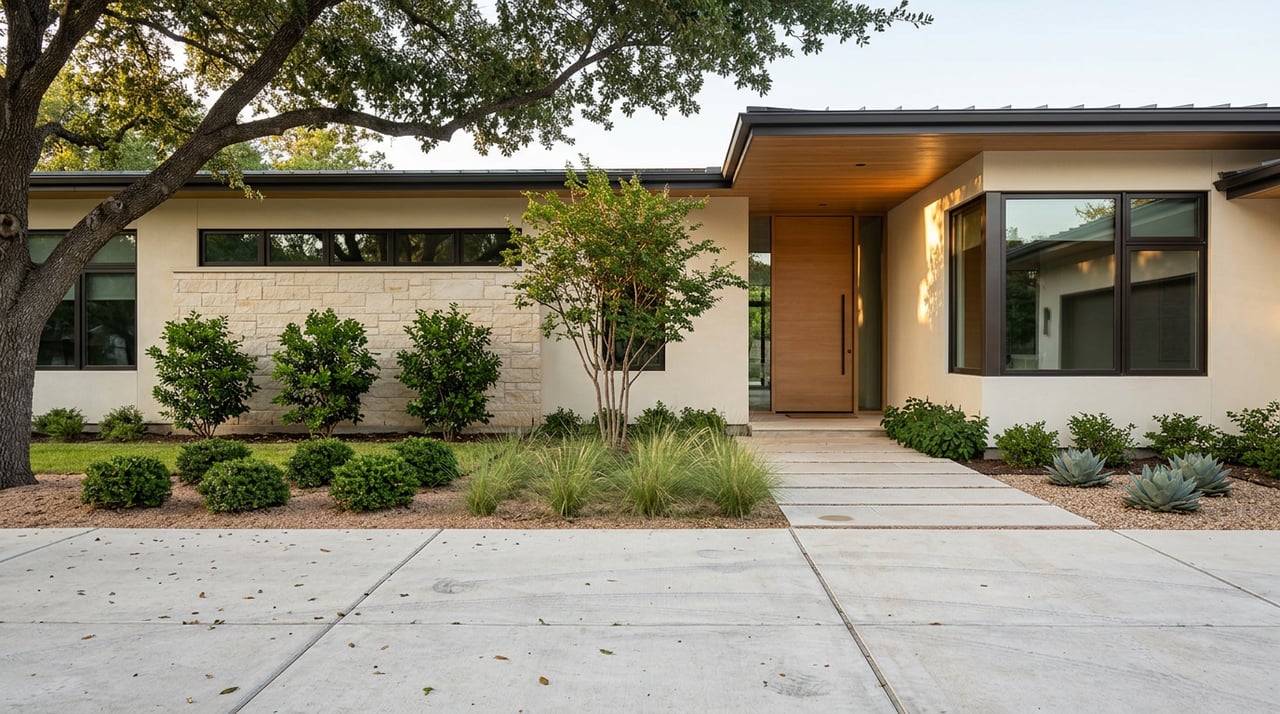
- Identifying cues: Larger windows, mixed modern materials like metal, stucco, glass, wood, and flat or asymmetric roofs.
- Interior cues: Open-concept living, high ceilings, and luxury finishes.
- Renovation potential: Often needs less work. Focus on long-term durability, site drainage, and neighborhood scale.
- Inspection watch-outs: Quality varies. Verify permits, code compliance, drainage, and tree-protection adherence.
Touring checklist: what to look for
Smart questions to ask
- Year built and dates of major updates to roof, HVAC, electrical, plumbing, and foundation.
- Permits for past renovations. Request numbers and documentation.
- Any history of water intrusion, sewer backups, or foundation repair. Ask for written disclosures.
- Recent termite reports or ongoing treatments.
- Floodplain and insurance details. Confirm whether the property has flooded and verify its status on local and FEMA maps.
Exterior quick checks
- Roof age and condition, especially transitions, flashing, and around chimneys.
- Site grading that slopes water away from the foundation. Note any pooling or signs of runoff toward the structure.
- Mature trees near the foundation or sewer lines. Look for root impacts.
- Cracks in masonry or stucco and any staining that signals moisture.
Interior quick checks
- Floor slope, sticking doors or windows, and drywall cracking at corners that might indicate settlement.
- Flooring transitions and patched areas that may hint at prior work.
- Fireplace and chimney condition, including mortar and visible flue sections.
- Signs of past water stains on ceilings or walls.
Systems to scan
- Water heater and HVAC installation dates and locations.
- Electrical panel type and capacity, with GFCI or AFCI protections where appropriate.
- Visible plumbing materials such as galvanized, copper, or PEX.
Inspection priorities that pay off
- Structural: Foundation performance on expansive clay soils, framing integrity, and any transitions from additions.
- Roof and drainage: Roof coverings, flashing, guttering, downspout routing, and site drainage patterns.
- MEP systems: Electrical capacity and safety, plumbing material and condition, and a sewer camera inspection for older laterals.
- Moisture and pests: Termite inspection, crawlspace moisture, and attic or insulation conditions.
- Environmental: Lead paint awareness for pre-1978 homes and the possibility of asbestos in older materials. Identify where testing may be appropriate if you plan renovations.
- Permits and code: Flag potential unpermitted additions or systems. This helps you understand risk and future resale considerations.
Style-specific inspection tips
- Tudor and revival: Focus on stucco and masonry interfaces, chimney flues, and ventilation in steep roof areas.
- Craftsman and bungalow: Check porch beams and foundations, and be alert to original wiring concealed in built-ins.
- Mid-century and modern: Evaluate low-slope roof membranes and the thermal performance of large window walls.
- Ranch on slab: Look for slab cracks and consider slab leak detection for older plumbing.
- Contemporary and infill: Confirm that lot drainage works and that tree-protection measures were followed during construction.
Local rules that shape your plan
- Historic status: Some Austin properties carry historic designations or lie within overlay areas. These can limit exterior changes and require approvals. Verify any status early to understand scope.
- Permits: The City of Austin requires permits for many structural, electrical, plumbing, and addition projects. Missing permits can complicate resale and may require corrections.
- Tree protection: Large trees are often protected by local ordinance. Plan for preservation or permitted removals when designing additions or pools.
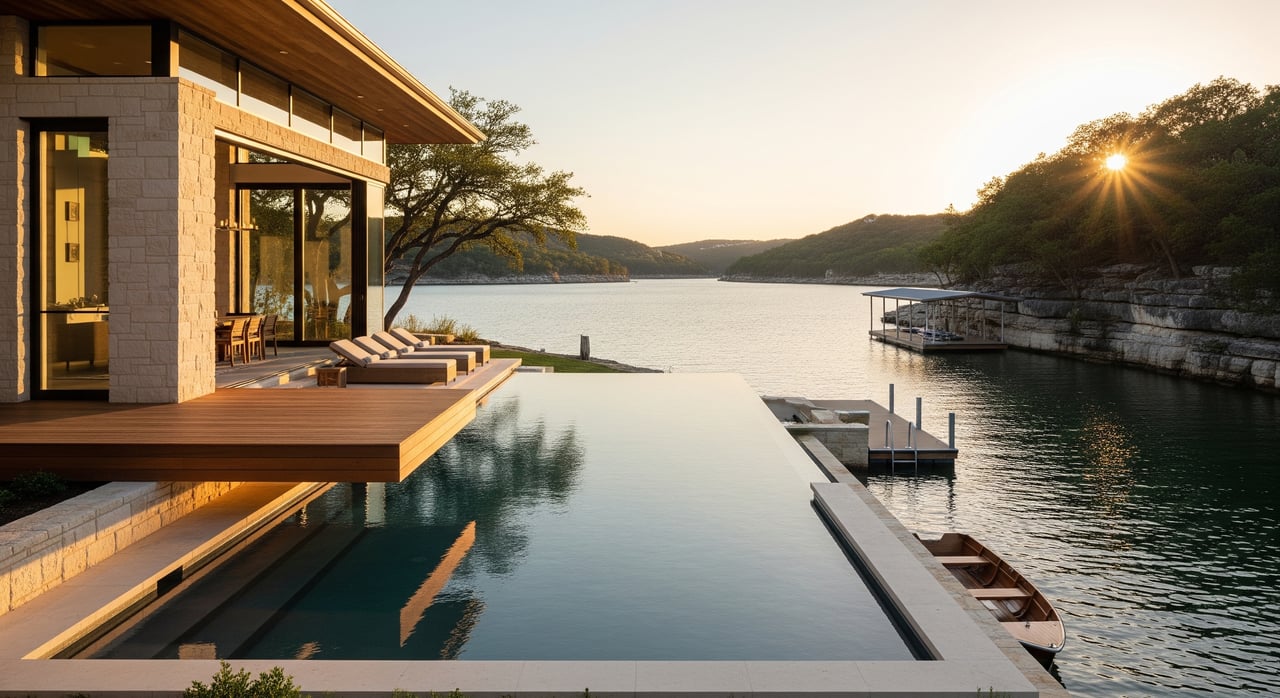
- Floodplain: Proximity to Lake Austin and creeks can trigger floodplain requirements and elevation standards. Confirm risk and permitting needs before you plan major work.
- ADUs and coverage: Rules for accessory dwellings and impervious cover affect additions and outbuildings. Confirm current code if you are considering an ADU.
- Drainage: New builds and additions must meet site drainage standards. This can influence grading, retaining, and hardscape choices.
Balancing character and comfort
Older Tarrytown homes can blend historic charm with modern efficiency. Your biggest wins often come from thoughtful HVAC upgrades, targeted insulation, and careful window strategies. Weigh the benefits of restoring original sash and trim against the comfort and efficiency of replacements, especially on revival and bungalow homes where character is a draw.
Foundation and sewer scope decisions deserve early attention. On clay soils, a structural engineer’s opinion can clarify whether you need localized piers or more extensive work. For older plumbing, a camera inspection of the sewer lateral helps you budget and avoid surprises.
If you plan a larger renovation, assemble a team that understands Austin permitting, historic sensitivities, and tree rules. Licensed home inspectors, engineers, and experienced contractors can help you estimate costs and phase improvements wisely.
Your next steps in Tarrytown
If you are drawn to Tudor peaks, mid-century glass, or a sleek new build, the right strategy is equal parts design vision and due diligence. A focused search that accounts for style, lot traits, drainage, and likely renovations will save you time and help you bid with confidence.
For discreet, concierge-level guidance from agents who know Tarrytown block by block, connect with Joe & Cara Keenan. You will get tailored advice, careful property vetting, and a smooth path from first tour to final keys.
FAQs
What home styles are most common in Tarrytown, Austin?
- You will see Tudor and Colonial Revival homes from the early 20th century, Craftsman bungalows, mid-century modern and ranch homes, and a growing number of contemporary infill builds.
What inspection issues are typical for older Tarrytown houses?
- Expect to evaluate foundations on expansive clay soils, roof conditions, older electrical and plumbing systems, potential moisture or termite activity, and the need for HVAC and insulation updates.
How do historic rules impact renovations in Tarrytown?
- If a property is a designated landmark or inside a historic overlay, exterior changes can require approvals and may limit scope, so verify status with the proper city offices before planning work.
Are floodplains a concern near Lake Austin in Tarrytown?
- Some parcels near creeks or Lake Austin may have floodplain considerations that affect permitting and design, so confirm flood status and insurance requirements before you proceed.
What permits should I verify when buying in Tarrytown?
- Ask for permit numbers and documentation for structural changes, electrical and plumbing work, additions, and significant remodels to avoid compliance issues at resale.
What upgrades add comfort without losing character in older homes?
- Target HVAC, insulation, and air sealing first, and weigh window restoration versus replacement to balance efficiency with preserved trim, sash, and facade character.
Why is a sewer camera inspection recommended for older properties?
- Older cast-iron or clay laterals can deteriorate; a camera inspection reveals condition and helps you plan repairs before you close.