 #1 Austin Board of Realtors Team 2024#1 Austin Board of Realtors Team 2024
This property has sold on May 7, 2021. Looking for something similar? Contact us or browse available homes.
Per MLS rules, only the primary photo is shown for non-Keenan closed listings.
This property is no longer actively listed. We can help you find similar homes currently for sale, notify you if this property relists, or explore off-market opportunities in the area.
Why you're seeing this property: Unlike major portals that hide off-market listings, we maintain the most comprehensive Austin property database. View market history, neighborhood data, and discover similar homes currently for sale. #1 Austin Realtor Team 2024.
5 bed, 3 bath, 4,005 sqft on 0.44 acres in Highland Park West. Austin, TX 78731. Last listed at $1,650,000, sold May 7, 2021. Austin ISD.
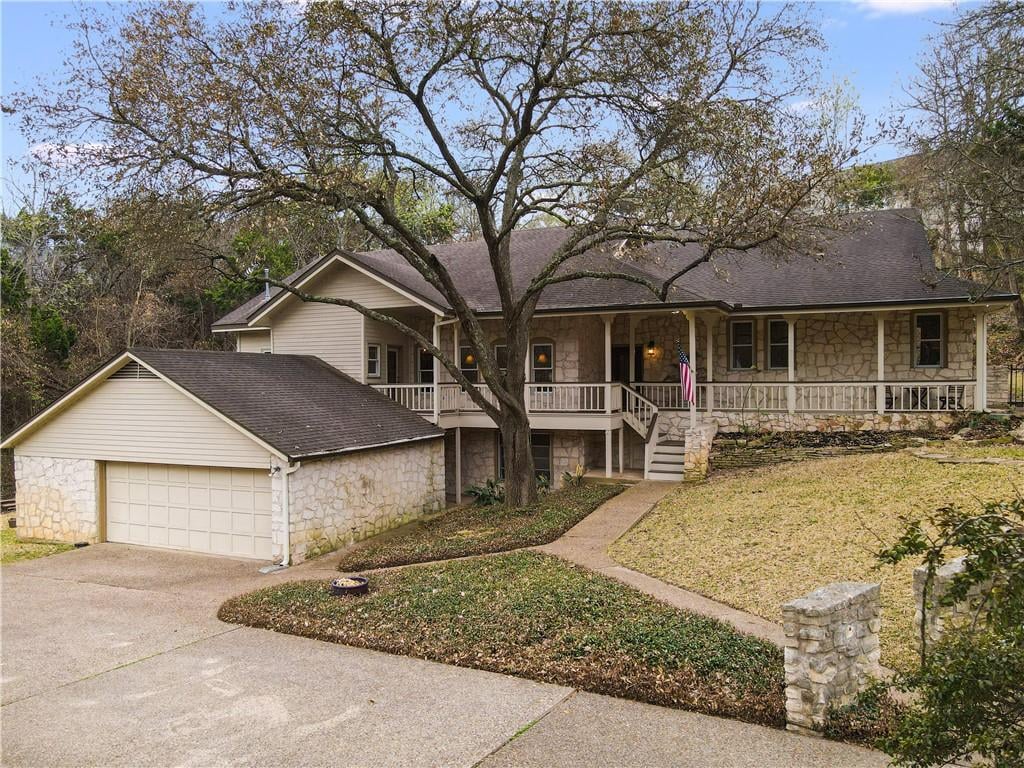
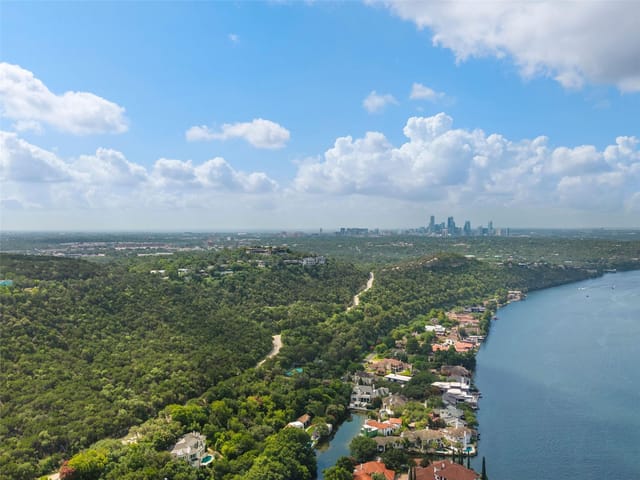
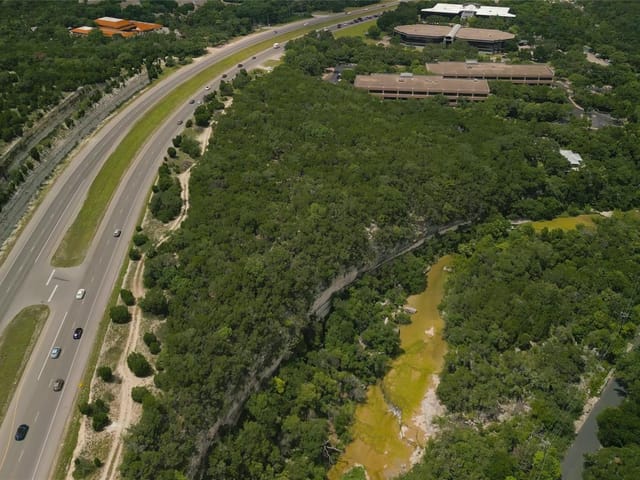
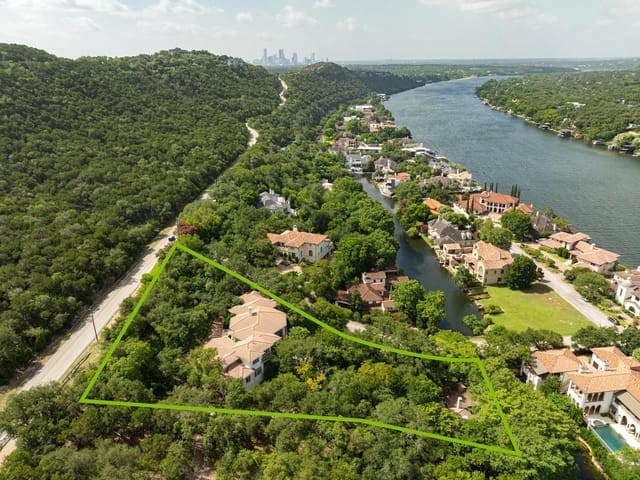
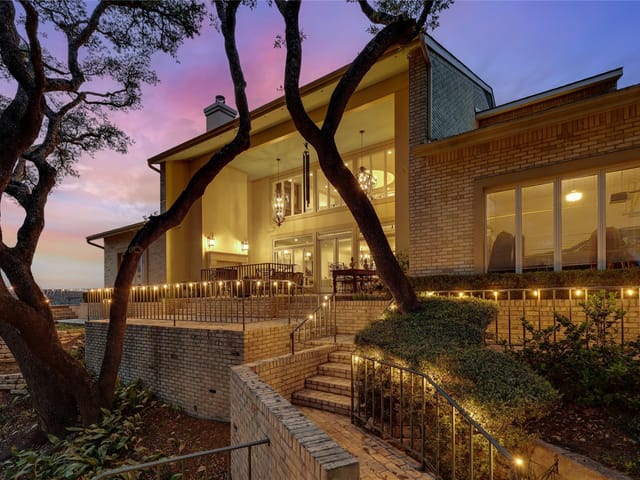
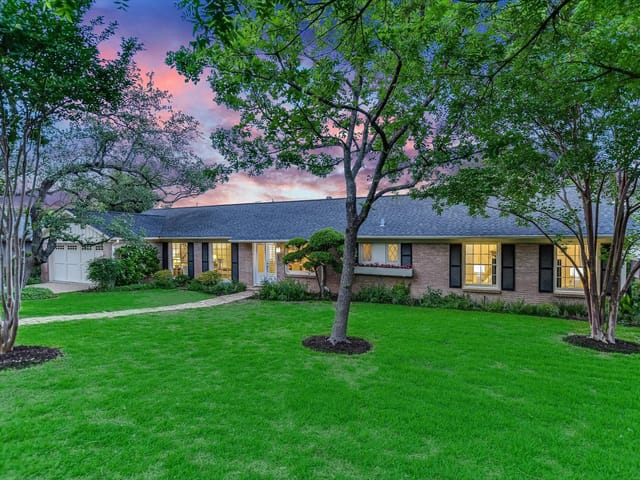
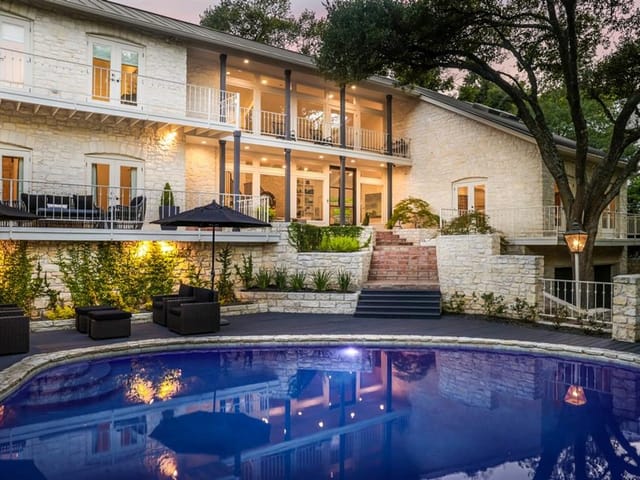
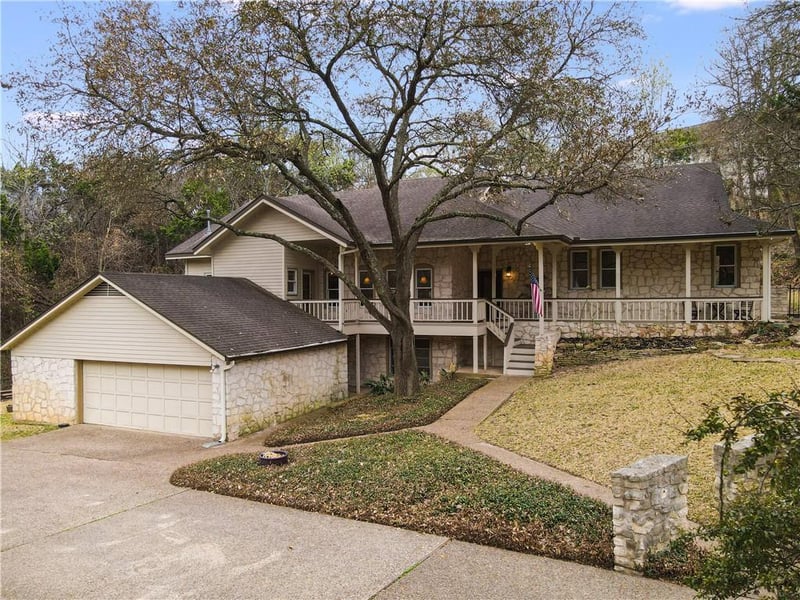
This lovely home is perched at the end of a quiet cul de sac in the heart of Highland Park West/Balcones Park. Gorgeous mature trees are spread throughout the property with a dry creek (NOT in flood zone) and natural wooded views. The exterior is stone with a welcoming covered porch that stretches across the front of the home. It is tranquil and peaceful. Among the many other features you will notice as you walk through this large home, there are many that are not readily visible, for example the home has solar panels on the back of the roof, greatly reducing the electricity bills; and a private well. The well water is not potable, but offers water for irrigation of the approximately 0.44 acre lot (per 4/2021 survey) and a potential new pool. This really is a must see! For a showing, contact your Realtor to set up an appointment.
Highland Park West has the highest concentration of original mid-century ranch homes still standing in any Austin neighborhood west of MoPac. While other areas have torn down their 1950s houses to build new, Highland Park West has largely preserved its character, and that combination of period homes, big lots, and a live oak canopy with 60 years of growth gives the neighborhood a feel that no new construction can reproduce.
Highland Park West sits between MoPac to the east, Mount Bonnell and Lake Austin to the west, Bull Creek Road to the north, and Balcones Drive to the south. Downtown is about 12 minutes south on MoPac. The 35th Street corridor provides walkable access to Central Market, Tiny Boxwoods, and local shops. Mount Bonnell Road runs along the western edge, giving direct access to one of Austin's most iconic overlooks. The location is genuinely central - equidistant from downtown, the Domain, and the Arboretum.
Mid-Century Ranch homes account for roughly 45% of stock, defining the neighborhood's identity. These are single-story, three- and four-bedroom homes built between 1950 and 1970, typically 1,500 to 2,500 square feet on quarter-acre to half-acre lots. Many retain original rooflines, stone fireplaces, and terrazzo floors. Updated Ranch homes with modernized interiors make up about 25% and represent the sweet spot for buyers wanting character without a full renovation. Modern Hill Country builds account for 15%. Pricing starts around $800,000 for unrenovated originals and reaches $2 million for updated homes on premium greenbelt lots.
Highland Park West is served by Austin ISD. Casis Elementary draws families from across west Austin and consistently ranks among the district's top elementary schools. O. Henry Middle School continues the pipeline, and Austin High School completes it. Austin High's central location and strong college placement make it a draw for families wanting quality public education. Many Casis families walk to school along shaded residential streets, adding to the community feel.
The lifestyle is defined by what it is not. It is not a see-and-be-seen neighborhood. Streets curve with the terrain rather than following a grid, and lots are large enough that houses feel spaced apart. Perry Park and Dellana Park provide green space. Mount Bonnell and Mayfield Park are within five minutes. Bull Creek Greenbelt is accessible from the northern edge. For dining, Chez Zee has served comfort food on Balcones Drive for decades. Tiny Boxwoods brings its garden-setting farm-to-table concept. Postino in Bryker Woods does wine and bruschetta. Eldorado Cafe handles Tex-Mex. Bartlett's offers steaks and an old-school bar. Central Market on North Lamar serves as the de facto town square.
Highland Park West threads the needle between Tarrytown's higher prices and Rosedale's more modest scale. It offers larger lots and more character than Northwest Hills' production builds. It is more affordable than the Eanes ISD neighborhoods across MoPac. And it has a more residential feel than Clarksville, which has absorbed more commercial development. The main consideration is that many original homes need meaningful investment - new roofs, updated electrical, HVAC replacement, and kitchen renovations.
Highland Park West fits buyers who value architectural character and mature landscaping over new construction. It works for families wanting Casis Elementary and Austin High without the Tarrytown premium. It suits people who want proximity to downtown but prefer quiet, curving streets. And it draws buyers who appreciate mid-century design and want a home that feels like Austin rather than a suburb. If you need a brand-new kitchen and a four-car garage, you will pay a renovation premium. But if you want to live under a canopy of live oaks in a neighborhood that has resisted tearing everything down, Highland Park West is one of the few central Austin places where that is still possible.
School District: Austin ISD
View Highland Park West neighborhood guideVerified property facts
3401 Ledgestone Dr is zoned for Austin ISD with assigned schools: Highland Park (elementary), Lamar (Austin ISD) (middle), McCallum (high). School assignments should be verified directly with the district.
3401 Ledgestone Dr is a Residential built in 1981 featuring 5 bedrooms, 3 full, 1 half bathrooms, 4,005 square feet, 0.44-acre lot.
3401 Ledgestone Dr was last listed at $412 per square foot across 4,005 sqft. The Highland Park West neighborhood guide reference price is $1,600,000 (Highland Park West neighborhood guide · reference price).
The most recent annual property tax for 3401 Ledgestone Dr is $17,972. Texas has no state income tax, so property taxes are a primary revenue source. Rates vary by jurisdiction and exemptions. Verify current amounts with the county appraisal district.
#1 Austin Board of Realtors Team. 1,000+ homes sold and $1B+ in career sales over 25+ years in Austin.
25+ years advising buyers and sellers in this community
Listing information last updated May 8, 2021.
Listed by Rebecca Realty, LLC
MLS# 3116189 • Closed
IDX inquiries: Keenan Group at Compass · (512) 415-7653
Properties displayed may be listed or sold by various participants in the MLS.
1 record on file
Every recorded listing, sale, and lease at 3401 Ledgestone DR, whoever represented it.
Prices shown are list prices. Closed sale prices are available to registered clients in accordance with ACTRIS rules.
Listing timeline with current price, original ask, and market time.
Public record data from county appraisal records. Market value can differ from assessed value.
| Year | Taxes | Total Assessment | Land | Additions |
|---|---|---|---|---|
2025+4.6% | — | $1,725,000 | — | — |
2024-11.6% | — | $1,648,520 | $1,400,000 | $1,070,745 |
2023+23.9% | — | $1,865,371 | $1,400,000 | $248,520 |
2022 | — | $1,505,895 | $1,400,000 | $465,371 |
Zoned assignments come from the property school fields available to us. District context schools are shown only when an assigned tier is missing. Contact the school district directly to verify current boundaries and enrollment eligibility.
Excluded from this estimate: property taxes, home insurance, and HOA dues. Each requires verified amount, cadence or unit, source, and as-of details.
20% ($330K)
Adjustable assumption - not a lending recommendation.
$1,650,000
Luxury property intelligence
A sourced read on Highland Park West pricing, timing, and property scale. No automated valuation claim.
List price
$1,650,000
Price per sqft
$412/sqft
Vs. Neighborhood guide reference price
+3.1%
$1.6M · Highland Park West neighborhood guide · reference price
Days on market
Not available
Original to current
No verified reduction
$1.7M original
Active inventory context
2 listings
Price Position in Highland Park West
Listed 3% above the Highland Park West neighborhood guide reference price. Highland Park West neighborhood guide · reference price.
Source: MLS Grid / Unlock MLS and Keenan Group review as of Jun 3, 2026.
Request Private Market AnalysisLifestyle, schools, market context, and homes in Highland Park West
Active listings and buyer search context in Highland Park West
ZIP-level neighborhoods, schools, lifestyle, and Austin market context
Active 78731 listings and Northwest Hills market context
District guide, nearby schools, and homes by attendance area
Private Austin CMA, TCAD context, and pricing strategy
Pricing, prep, launch timing, and Compass marketing strategy
#1 ABOR Team 2024 with $1B+ career sales volume
3401 Ledgestone Dr was last listed at $1,650,000 and sold on May 7, 2021. The current MLS snapshot shows 58 active listings in 78731. Keenan Group has completed 91 verified transactions in 78731 within its 1,000+ completed transactions and $1B+ career volume across Austin. See Keenan Group's Highland Park West guide for current neighborhood analysis.
3401 Ledgestone Dr was built in 1981 (45 years ago). Buyers should budget for potential updates to major systems.
Answers use visible listing facts, school context, and neighborhood data available on this page. Verify time-sensitive details before making decisions.
Highland Park West is one of Austin's established neighborhoods, zoned for Austin ISD in the 78731 area. The Keenan Group has specialized in Highland Park West real estate for 25+ years with 1,000+ career transactions. Contact (512) 415-7653 for current market conditions and available homes.
Source: Keenan Group at Compass Real Estate, #1 Austin Board of Realtors Team (2024)
Homes sold by Keenan Group.
7 events on record
Current Price
$1,650,000
Timeline data compiled from MLS records and public records. Information deemed reliable but not guaranteed.
| Year | Taxes | Total Assessment | Land | Additions |
|---|---|---|---|---|
2025+4.6% | — | $1,725,000 | — | — |
2024-11.6% | — | $1,648,520 | $1,400,000 | $1,070,745 |
2023+23.9% | — | $1,865,371 | $1,400,000 | $248,520 |
2022 | — | $1,505,895 | $1,400,000 | $465,371 |
Timeline merges MLS activity (when permitted) with public records. Some details may be restricted to registered VOW clients.
| Address | Offered At |
|---|---|
| 4101 Far West BLVD | $875K |
| 4011 Greystone Dr | $1.20M |
| 3924 Arbor Glen Way | $1.25M |
| 6905 Ladera Norte | $1.90M |
| 4607 Balcones DR | $1.50M |
| 4403 Canyonside TRL | $1.23M |
| 5905 Balsam HOLW | $850K |
| 7602 Rim CV | $1.98M |
Comparable homes that recently closed in this area
Near This Home
Active listings in the same neighborhood or ZIP search area. More homes in Highland Park West
Neighborhood guide and local insights
Highland Park West has the highest concentration of original mid-century ranch homes still standing in any Austin neighborhood west of MoPac. While other areas have torn down their 1950s houses to build new, Highland Park West has largely preserved its character, and that combination of period homes, big lots, and a live oak canopy with 60 years of growth gives the neighborhood a feel that no new construction can reproduce. Highland Park West sits between MoPac to the east, Mount Bonnell and Lake Austin to the west, Bull Creek Road to the north, and Balcones Drive to the south. Downtown is about 12 minutes south on MoPac. The 35th Street corridor provides walkable access to Central Market, Tiny Boxwoods, and local shops. Mount Bonnell Road runs along the western edge, giving direct access to one of Austin's most iconic overlooks. The location is genuinely central - equidistant from downtown, the Domain, and the Arboretum. Mid-Century Ranch homes account for roughly 45% of stock, defining the neighborhood's identity. These are single-story, three- and four-bedroom homes built between 1950 and 1970, typically 1,500 to 2,500 square feet on quarter-acre to half-acre lots. Many retain original rooflines, stone fireplaces, and terrazzo floors. Updated Ranch homes with modernized interiors make up about 25% and represent the sweet spot for buyers wanting character without a full renovation. Modern Hill Country builds account for 15%. Pricing starts around $800,000 for unrenovated originals and reaches $2 million for updated homes on premium greenbelt lots. Highland Park West is served by Austin ISD. Casis Elementary draws families from across west Austin and consistently ranks among the district's top elementary schools. O. Henry Middle School continues the pipeline, and Austin High School completes it. Austin High's central location and strong college placement make it a draw for families wanting quality public education. Many Casis families walk to school along shaded residential streets, adding to the community feel. The lifestyle is defined by what it is not. It is not a see-and-be-seen neighborhood. Streets curve with the terrain rather than following a grid, and lots are large enough that houses feel spaced apart. Perry Park and Dellana Park provide green space. Mount Bonnell and Mayfield Park are within five minutes. Bull Creek Greenbelt is accessible from the northern edge. For dining, Chez Zee has served comfort food on Balcones Drive for decades. Tiny Boxwoods brings its garden-setting farm-to-table concept. Postino in Bryker Woods does wine and bruschetta. Eldorado Cafe handles Tex-Mex. Bartlett's offers steaks and an old-school bar. Central Market on North Lamar serves as the de facto town square. Highland Park West threads the needle between Tarrytown's higher prices and Rosedale's more modest scale. It offers larger lots and more character than Northwest Hills' production builds. It is more affordable than the Eanes ISD neighborhoods across MoPac. And it has a more residential feel than Clarksville, which has absorbed more commercial development. The main consideration is that many original homes need meaningful investment - new roofs, updated electrical, HVAC replacement, and kitchen renovations. Highland Park West fits buyers who value architectural character and mature landscaping over new construction. It works for families wanting Casis Elementary and Austin High without the Tarrytown premium. It suits people who want proximity to downtown but prefer quiet, curving streets. And it draws buyers who appreciate mid-century design and want a home that feels like Austin rather than a suburb. If you need a brand-new kitchen and a four-car garage, you will pay a renovation premium. But if you want to live under a canopy of live oaks in a neighborhood that has resisted tearing everything down, Highland Park West is one of the few central Austin places where that is still possible.
Looking for more homes in Highland Park West?
Contact an Expert →Active listings near 3401 Ledgestone Dr