
Buying Hill Country Ranch Property 2026: A Complete Guide
Keenan Group has guided ranch buyers through every step of Hill Country purchases. A Hill Country ranch purchase is a real estate transaction involving rural acreage (typically 10-500+ acres) in the limestone karst region of central Texas, west and southwest of Austin. Unlike residential home purchases, ranch transactions involve additional due diligence on water rights, mineral ownership, agricultural tax exemptions, soil conditions, and fencing obligations. As of Q1 2026, Hill Country ranch land prices range from $10,000-$40,000 per acre depending on location, water access, views, and improvements.
Ranch transactions take 60-90 days minimum and sometimes much longer. The due diligence is fundamentally different from a house purchase - you are evaluating water, minerals, ag exemptions, fencing, easements, and soil conditions that most residential agents have never dealt with. We work with agricultural attorneys, water specialists, and wildlife biologists on every ranch deal.
Water Rights: The #1 Issue
Water is the single most important factor in any Hill Country ranch purchase. The region sits on limestone karst terrain, which means water behaves differently here than in East Texas or the Blackland Prairie.
| Water Issue | What to Check | Cost if Missed |
|---|---|---|
| Well flow rate | Minimum 5 GPM for house + livestock | $15K-$50K to drill new well |
| Well depth | Hill Country wells: 200-800 ft typical | $30-$75/foot drilling cost |
| Water quality | Test for bacteria, hardness, TDS | Treatment system $5K-$15K |
| Surface water rights | LCRA permits required for creek/river use | Legal fees + permit delays |
| Groundwater rights | Rule of Capture - neighbor can draw same aquifer | No legal remedy |
Before closing on any ranch, test existing wells for flow rate, depth, and water quality. A well producing less than 2 GPM will struggle to support a house and small livestock operation. Budget $15,000-$50,000 for new well drilling if existing wells are inadequate.
Agricultural Exemptions
Agricultural exemptions reduce property taxes by assessing land at its productive value rather than market value. On a 50-acre Hill Country ranch, losing an ag exemption could mean a $30,000-$50,000 annual tax increase. Understanding how exemptions work is not optional.
| Exemption Type | Requirements | Best For | Complexity |
|---|---|---|---|
| Cattle | 1 animal unit per 5-10 acres | Most straightforward | Low |
| Wildlife management | Filed plan with county appraiser | Recreational ranches | Medium |
| Hay production | Active cutting and baling | Flatter parcels | Medium |
| Beekeeping | Minimum hive count varies by county | Small acreage | Low |
Each county sets its own requirements. Hays County differs from Blanco County, which differs from Gillespie County. Verify specific requirements for your property's county before relying on an ag exemption in your financial planning.
The biggest financial mistake we see in ranch purchases is buyers who assume the ag exemption transfers automatically. It often does, but not always - especially if the property has been vacant or the previous owner let the exemption lapse. Losing a wildlife management exemption on 50 acres can add $30,000-$50,000 to your annual tax bill overnight.
Soil, Terrain, and Building
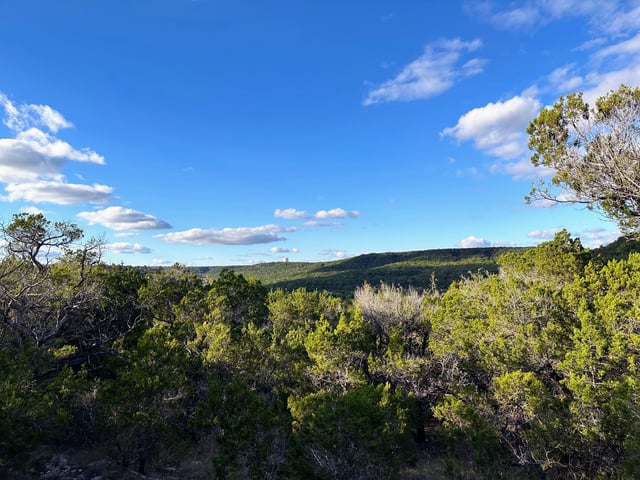
Hill Country terrain is limestone karst - rocky ground with thin topsoil over solid rock. This affects nearly every improvement.
- Septic systems: Engineered aerobic systems at $15,000-$25,000+ (standard septic often not viable on rock)
- Foundations: May need blasting or pier-and-beam construction ($20,000-$50,000+ additional)
- Fencing: Hydraulic augers or jackhammers required for post holes in rock
- Roads: Caliche base roads on ranch properties need periodic maintenance ($5,000-$15,000 per mile)
Get a soil survey before buying. The USDA Web Soil Survey provides free data, but a site-specific geotechnical assessment is worth the investment for any property where you plan to build.
Fencing and Boundaries
Texas is an open-range state in many counties - you must fence livestock OUT of your property rather than expecting neighbors to fence them in. Budget $8-$15 per linear foot for new ranch fencing. A 100-acre square property has roughly 8,400 linear feet of perimeter - that is $67,000-$126,000 for new fencing alone.
Walk the fence lines before closing. Deferred fencing maintenance is one of the most common hidden costs in ranch purchases.
Minerals and Easements
Always check whether mineral rights are included. In the Hill Country, mineral rights have frequently been severed from surface rights over the past century. If minerals are severed, someone else may have the right to access your property for extraction. Pipeline, utility, and road easements add further complexity.
Ranch Property Types (As of Q1 2026)
| Type | Acreage | Price Range | Character |
|---|---|---|---|
| Working cattle ranch | 50-500+ | $1M-$10M+ | Active operation, infrastructure |
| Recreational ranch | 20-200+ | $500K-$5M | Hunting, wildlife, minimal improvements |
| Gentleman ranch | 10-50 | $800K-$5M | Nice home, small ag operation for exemption |
| Vineyard/event property | 10-100+ | $3M-$15M+ | Commercial permits, revenue potential |
Frequently Asked Questions
How much does Hill Country ranch land cost per acre?
As of Q1 2026, improved ranch land (fenced, with wells and roads) in Hays, Blanco, and Gillespie counties runs $15,000-$40,000 per acre. Unimproved land with views and water access runs $10,000-$25,000/acre. Properties within 30 minutes of Austin command the highest prices.
Do I need an agricultural exemption?
If you are buying 10+ acres, losing or not having an ag exemption can cost $20,000-$50,000+ per year in additional property taxes. Even "gentleman ranch" buyers who primarily want a nice home on acreage should plan to maintain an ag exemption through cattle, wildlife management, or hay production.
How long does a ranch purchase take to close?
Plan for 60-90 days minimum. Ranch transactions require extended due diligence for water testing, mineral rights verification, boundary surveys, ag exemption confirmation, and environmental assessments. Complex transactions with multiple parcels or mineral disputes can take 120+ days.
What is the biggest mistake buyers make with ranch purchases?
Not testing the water before closing. A $2M ranch with a well that only produces 1 gallon per minute is essentially unusable for livestock and unreliable for a home. Drilling a new well can cost $15,000-$50,000 and there is no guarantee you will hit adequate water. Test first, always.
Keenan Group has deep experience with Hill Country ranch transactions. We coordinate agricultural attorneys, water specialists, and wildlife biologists to guide buyers through every step. See also our Wine Estates Guide and Dripping Springs Guide for related Hill Country content.
Ready to get started?
Ready to take the next step? Get a home valuation if you are considering selling, explore buyer resources if you are searching, or review the Keenan Group's track record across 1,000+ Austin transactions.
Build a Personalized Austin Plan
Every household's Austin math is different. Start with a public plan, compare neighborhoods, schools, lifestyle priorities, and price bands, then save it when personalization matters.