

1031 Exchanges in Austin 2025: Deferring Capital Gains
The Keenan Group has guided dozens of 1031 exchanges in the Austin luxury market. A 1031 exchange is a tax-deferral strategy authorized under Section 1031 of the Internal Revenue Code that allows real estate investors to sell an investment property and reinvest the full proceeds into another qualifying "like-kind" property without paying capital gains taxes at the time of sale. The tax is deferred, not eliminated - but the ability to roll 100% of your equity into the next investment without a tax haircut is one of the most powerful wealth-building tools in real estate.
"We've guided dozens of 1031 exchanges in the Austin market. The investors who execute them well can compound their wealth 30-40% faster than those who sell and pay taxes each time. But the timeline rules are unforgiving - miss the 45-day identification deadline by even one day and the entire exchange fails." --- Joe Keenan, Keenan Group, #1 ABOR Team 2024
For Austin investors sitting on properties that have appreciated 40-80% since 2019, understanding 1031 exchange rules is essential before making any sell decision.
The Rules You Cannot Break
The IRS is strict about 1031 exchanges, and violations are not forgiven. Here are the non-negotiable requirements.
Property type: Both the property you sell (relinquished property) and the property you buy (replacement property) must be held for investment or business use. Your primary residence does not qualify. Vacation homes are a gray area - consult a tax advisor. "Like-kind" is broadly defined for real estate: you can exchange a single-family rental for an apartment complex, or a commercial building for raw land.
Timeline: You have exactly 45 calendar days from the date of sale to identify your replacement property in writing. You have exactly 180 calendar days to close on it. These deadlines do not extend for weekends, holidays, or any other reason.
Qualified Intermediary (QI): You cannot touch the sale proceeds at any point during the exchange. A QI holds the funds between the sale and the purchase. You must engage the QI before closing on your sale.
Equal or greater value: To defer 100% of your capital gains, the replacement property must be equal to or greater than the relinquished property in both purchase price and debt. If you buy something cheaper or take cash out, the difference ("boot") is taxable.
1031 Exchange Timeline Summary
| Milestone | Deadline | What Happens |
|---|---|---|
| Engage QI | Before sale closing | QI set up, exchange agreement signed |
| Sale closes | Day 0 | Proceeds go to QI (never to you) |
| Identify replacement | Day 45 | Written ID to QI (up to 3 properties) |
| Close on replacement | Day 180 | QI sends funds to closing agent |
How the Process Works
The standard 1031 exchange follows four steps.
First, you engage a Qualified Intermediary and list your investment property for sale. QI fees range from $750 to $1,500 for a standard exchange.
Second, you close on the sale. The proceeds go directly to the QI, not to you. You never have constructive or actual receipt of the funds.
Third, within 45 days, you submit a written identification of your replacement property to the QI. You can identify up to 3 properties regardless of value (the "three-property rule"), or an unlimited number as long as their combined value does not exceed 200% of the sale price (the "200% rule").
Fourth, you close on the replacement property within 180 days. The QI sends the funds directly to the closing agent.
Austin-Specific Strategies
"Austin's appreciation cycle creates ideal 1031 conditions. An investor who bought a rental in East Austin for $400K in 2016 might sell for $800K today. Instead of paying $60K-$80K in federal and state-equivalent capital gains, they roll the full amount into a fourplex that generates twice the cash flow." --- Cara Keenan, CLHMS, Million Dollar Guild
Scaling up. An investor with a single-family rental that has appreciated from $400K to $800K can exchange into a small multifamily property generating higher cash flow without paying capital gains on the $400K gain. As of Q1 2026, Austin duplexes and fourplexes in the $700K-$1.2M range offer this path.
Geographic diversification. Austin appreciation has been strong, but some investors want to diversify. You can 1031 exchange an Austin property into an investment property in any other U.S. market - or the reverse. We regularly work with out-of-state investors exchanging into Austin.
Repositioning. Exchange a high-maintenance older rental into a newer property with lower maintenance costs and better tenants. The exchange defers the tax while upgrading your portfolio quality.
The DST Option for Passive Investors
A Delaware Statutory Trust (DST) is a fractional ownership structure that qualifies as replacement property in a 1031 exchange. Investors buy a share of a professionally managed property - often a large apartment complex, medical office building, or industrial facility - with minimum investments typically starting at $100,000.
DSTs are popular with investors who want to exit active property management while still deferring their capital gains. The trade-off is lower returns, less flexibility, and fees that can eat into performance. DSTs make the most sense for older investors looking to simplify.
Common Mistakes That Kill Exchanges
- Not engaging the QI early enough. The QI must be in place before your sale closes. If you sell first and then try to set up an exchange, it is too late.
- Missing the 45-day identification deadline. The most common failure point. In Austin's competitive market, start your replacement property search before your sale closes.
- Taking possession of funds. Even briefly. If sale proceeds hit your bank account, the exchange fails.
- Receiving boot without planning for it. If your replacement property costs less than your sale price, the difference is taxable.
- Ignoring the political risk. Congress has repeatedly proposed eliminating or limiting 1031 exchanges. While exchanges have survived every attempt so far, the possibility means investors should consider acting sooner rather than later.
Honest Tradeoffs
A 1031 exchange is not free money. The deferred tax follows you - when you eventually sell without exchanging, the full accumulated gain becomes taxable (though "stepped-up basis" at death can eliminate this for heirs). The 45-day identification window creates pressure that can lead to overpaying for a replacement property. And QI bankruptcy risk, while rare, means your exchange proceeds sit with a third party that may not be FDIC-insured. Always verify your QI's bonding and insurance.
Frequently Asked Questions
Can I 1031 exchange my primary residence?
No. Section 1031 applies only to property held for investment or business use. However, you can convert a primary residence to a rental, hold it for 1-2 years (the IRS does not specify a minimum, but most tax advisors recommend at least one year of rental activity), and then exchange it.
How much can I save with a 1031 exchange in Austin?
On a property with $400K in gains, you could defer approximately $60,000-$100,000 in combined federal capital gains tax (15-20%), depreciation recapture (25%), and net investment income tax (3.8%). The exact amount depends on your income bracket and holding period.
What happens if I cannot find a replacement property in 45 days?
The exchange fails and you owe capital gains tax on the full gain. This is why we recommend starting your replacement property search at least 30 days before your sale closes. The Keenan Group can help identify replacement properties across Austin and Central Texas well in advance.
Can I exchange into multiple properties?
Yes. You can identify up to 3 replacement properties (the three-property rule) or more under the 200% rule. You can close on one or all of them, as long as total value meets or exceeds the relinquished property.
A successful 1031 exchange requires coordination between a Qualified Intermediary, a real estate agent experienced with exchange timelines, a CPA, and a real estate attorney. The Keenan Group has handled dozens of 1031 exchanges and understands the urgency of the 45-day and 180-day deadlines in Austin's competitive market. See also our Investment Property Financing Guide for related strategies.
Ready to get started?
Ready to take the next step? Get a home valuation if you are considering selling, explore buyer resources if you are searching, or review the Keenan Group's track record across 1,000+ Austin transactions.
Interested in East?
Get a confidential market brief for East with current inventory, pricing, and strategy recommendations from Austin's #1 team.
Active Listings in East
View All →
30 Chalmers Ave
Austin, TX 78702
Chalmers Add
MLS# 7416137 • Courtesy of ACTRIS
$2,825,000
$989/sqft

3113 Prado St
Austin, TX 78702
Chernosky 12
MLS# 3584242 • Courtesy of ACTRIS
$2,395,000
$805/sqft
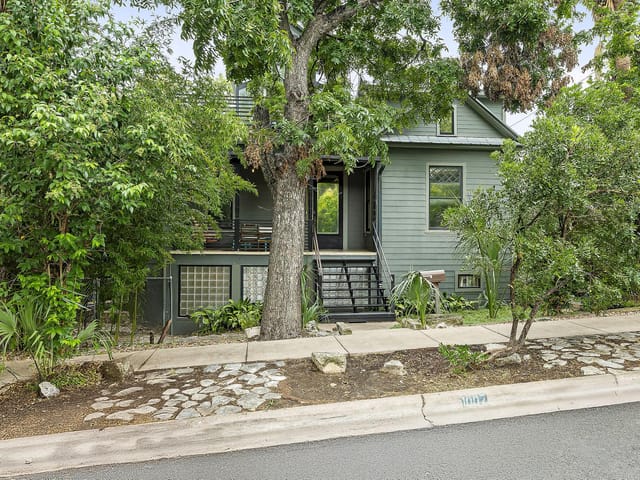
1007 E 8th ST
Austin, TX 78702
Robertson George L
MLS# 8369328 • Courtesy of ACTRIS
$2,295,000
$437/sqft

2005 E 8th St Unit #1
Austin, TX 78702
Oil Mill
MLS# 3081765 • Courtesy of ACTRIS
$2,250,000
$743/sqft