

A property tax protest in Central Texas is the formal process by which homeowners challenge the appraised value assigned to their property by the county appraisal district. Based on the Keenan Group's 25 years and 1,000+ transactions in Central Texas, homeowners who protest and file proper exemptions save $1,000-$5,000+ annually. As of Q1 2026, Texas homeowners have until May 15 to file a protest, and the general residence homestead exemption reduces taxable value by $140,000 for school district taxes.
"In 25 years and 1,000+ transactions, we've seen property tax management save our clients tens of thousands of dollars over a 10-year hold. The homestead exemption alone saves most Austin homeowners $1,500-$3,000 per year - and a successful protest on top of that can save another $1,000-$2,000. We provide complimentary CMAs to every client for their annual protest." --- Joe Keenan, Keenan Group, #1 ABOR Team 2024
Guide Contents
- Understanding Your Central Texas Property Tax Bill
- How Your Property Value Is Determined
- Essential Property Tax Exemptions
- Challenging Your Appraisal: The Property Tax Protest Process
- Should You DIY or Hire a Pro?
- County Focus: Travis, Williamson, Hays
- Mortgages and Property Taxes: Understanding Escrow
- Frequently Asked Questions
- Resources and Next Steps
- Glossary
Section 1: Understanding Your Central Texas Property Tax Bill
Texas has no state income tax. Property taxes are how the state funds schools, roads, emergency services, and local government. That means your property tax bill is likely higher than what you paid in other states - but you keep your entire paycheck.
Who Sets Your Tax Bill?
Your annual property tax bill is the combined total of rates from multiple taxing entities, each setting its own rate independently:
| Taxing Entity | Typical Rate (per $100 of value) | Share of Total Bill |
|---|---|---|
| School District (AISD, Eanes, RRISD, etc.) | $1.05-$1.36 | 50-60% |
| County (Travis, Williamson, Hays) | $0.30-$0.37 | 15-18% |
| City (Austin, Cedar Park, Round Rock, etc.) | $0.35-$0.55 | 15-20% |
| Healthcare/Hospital District | $0.10-$0.13 | 4-6% |
| Community College (ACC, Temple College) | $0.10 | 3-5% |
| Special Districts (MUD, ESD, etc.) | Varies | 0-5% |
Key point: There is no single "Austin property tax rate." Your bill depends on where your home sits and which entities have taxing authority over your address. Use our Austin ZIP Codes guide to identify your taxing entities.
For a detailed breakdown by school district, see our Austin Property Tax Rates 2026 guide.
How Is Your Tax Calculated?
Appraised Value x Tax Rate = Tax Bill
Your county appraisal district determines the appraised value. Each taxing entity sets its own rate. The exemptions you file reduce the appraised value before the rate is applied.
Example: A $750,000 home in Northwest Hills (Austin ISD, Travis County, City of Austin) with a homestead exemption:
- Appraised value: $750,000
- After $100,000 school district homestead exemption: $650,000 taxable value for school taxes
- After 20% county/city homestead exemption: $600,000 taxable value for county/city taxes
- Estimated annual tax bill: $13,500-$16,000
When Is Your Tax Bill Due?
| Date | Event |
|---|---|
| January 1, 2026 | Appraisal date - your home's value is assessed as of this date |
| April 15, 2026 | Appraisal notices mailed |
| May 15, 2026 | Protest deadline (or 30 days after notice, whichever is later) |
| October 2026 | Tax bills mailed |
| January 31, 2027 | Payment deadline (penalties and interest begin February 1) |
Section 2: How Your Property Value Is Determined
The county appraisal district determines the market value of your property as of January 1, 2026. They use three approaches:
Market Approach (Most Common for Homes)
The appraiser compares your home to similar properties that recently sold nearby. They adjust for differences in size, condition, lot size, location, and features.
Cost Approach
Estimates what it would cost to replace your home minus depreciation, plus land value. More common for newer or unique properties.
Income Approach
Based on rental income potential. Rarely used for owner-occupied homes but sometimes relevant for investment properties.
What Drives Your Appraised Value Up?
- Rising home sales in your neighborhood
- Renovations and additions (permits are public records)
- Market-wide appreciation trends
- New construction comparables
- Reclassification of land use
The 10% Homestead Cap
If you have a homestead exemption, your appraised value cannot increase by more than 10% per year from the prior year's appraised value. This is one of the most valuable protections for long-term homeowners.
Example: Your home's market value jumped from $750,000 to $850,000 (13.3% increase). With the homestead cap, your appraised value can only increase to $825,000 (10% of $750,000 = $75,000 cap). You save taxes on that $25,000 difference - and the cap compounds year over year.
Important: The 10% cap applies to your appraised value, not your market value. The appraisal district still tracks your full market value. If you remove or lose your homestead exemption, your appraised value resets to market value.
Section 3: Essential Property Tax Exemptions
Exemptions reduce the portion of your home's value that gets taxed. Filing is free and takes about 15 minutes. For a complete filing guide, see our Texas Homestead Exemption Guide.
General Residence Homestead Exemption
Available to all Texas homeowners who occupy their property as a primary residence.
| Taxing Entity | Exemption Amount (2026) |
|---|---|
| School District | $140,000 off appraised value |
| County (varies) | Typically 20% of appraised value |
| City (varies) | Typically 20% of appraised value or fixed amount |
| Special Districts | Varies by entity |
Annual savings on a $750,000 home: often about $1,000-$1,500 from the school portion alone, with higher total savings possible depending on local-option county, city, and special-district exemptions.
Over-65 / Disabled Person Exemption
Homeowners age 65+ or with qualifying disabilities get additional exemptions on top of the general homestead.
| Taxing Entity | Additional Exemption (2026) |
|---|---|
| School District | Additional $60,000 off appraised value |
| County/City (varies) | Often additional $25,000-$75,000 |
| Tax Ceiling (Freeze) | School taxes frozen at the amount due the year you turn 65 or qualify |
The tax ceiling is the real value here. Once you turn 65 or qualify as disabled, your school district taxes are frozen permanently. County and city entities may offer an optional freeze as well. This means no matter how much your appraised value increases, your school tax payment stays the same.
Disabled Veteran Exemption
| Disability Rating | Exemption Amount (2026) |
|---|---|
| 10-29% | $5,000 off appraised value |
| 30-49% | $7,500 off appraised value |
| 50-69% | $10,000 off appraised value |
| 70-99% | $12,000 off appraised value |
| 100% | Total property tax exemption on homestead |
Surviving spouses of veterans killed in action or who died from service-connected causes may also qualify for a total exemption.
Filing Deadlines (2026)
| County | Online Filing | Deadline |
|---|---|---|
| Travis (TCAD) | traviscad.org | April 30, 2026 |
| Williamson (WCAD) | wcad.org | April 30, 2026 |
| Hays (HCAD) | hayscad.com | April 30, 2026 |
You only need to file once. The exemption remains in effect until you sell the property or it no longer qualifies as your primary residence.
Section 4: Challenging Your Appraisal - The Property Tax Protest Process
In Travis County, roughly 60-70% of protests result in a lower appraised value. Most homeowners who protest get some reduction. Here is the step-by-step process.
Step 1: Review Your Appraisal Notice
You will receive a notice of appraised value from your county appraisal district in April 2026. Review it carefully:
- Is the property description accurate (square footage, bedrooms, bathrooms, lot size)?
- Does the appraised value reflect what your home would actually sell for as of January 1, 2026?
- Are comparable sales used by the district truly similar to your property?
Step 2: File Your Protest
Deadline: May 15, 2026 (or 30 days after the date on your appraisal notice, whichever is later).
You can file online, by mail, or in person. Filing is free.
| County | Online Protest Filing |
|---|---|
| Travis (TCAD) | traviscad.org/online-protests |
| Williamson (WCAD) | wcad.org |
| Hays (HCAD) | hayscad.com |
You do not need to specify your reason at filing. Just check "value is too high" on the form. You can present detailed evidence later.
Step 3: Gather Your Evidence
The strongest protests are built on comparable sales data. Here is what to collect:
- Comparable sales: 3-5 recent sales of similar homes within a half-mile of your property. Focus on homes with similar square footage, lot size, age, and condition.
- Property condition issues: Foundation problems, deferred maintenance, needed repairs. Get repair estimates in writing.
- Photos: Document any condition issues, deferred maintenance, or features the appraiser may have overstated.
- Appraisal district errors: Wrong square footage, bedroom/bathroom count, lot size, or property type.
- Your own CMA: A free Comparative Market Analysis from our team gives you professional-grade comparable sales data - the same data we use to price homes for sale.
Step 4: Attend Your Hearing (Informal First)
Most counties offer an informal meeting with an appraiser before a formal hearing. This is where the majority of protests are resolved.
Informal hearing: You meet one-on-one with an appraiser and present your evidence. They can agree to reduce your value on the spot. Be organized, respectful, and data-driven.
Formal hearing (ARB): If the informal process does not resolve your protest, you go before the Appraisal Review Board. This is a panel that hears your case and the district's case, then issues a binding determination.
Tips for your hearing:
- Lead with your comparable sales data. Numbers win, not emotions.
- Bring printed copies of everything. Three sets: one for you, one for the appraiser, one for the panel.
- Be concise. Present your case in 5-10 minutes.
- Focus on homes that sold for less than your appraised value, not homes that sold for more.
- If you have condition issues, bring repair estimates from licensed contractors.
- Know your target number before you walk in.
Step 5: Accept or Appeal
If the ARB decision is not satisfactory, you can:
- File binding arbitration (for properties with appraised value of $5 million or less) - $550 deposit
- Appeal to district court (more expensive, typically for higher-value properties)
- Accept the ARB determination
Most homeowners accept the informal or ARB result. The savings usually justify the time invested.
Should You DIY or Hire a Professional?
DIY Protest
Best for:
- Homeowners comfortable reviewing comparable sales
- Properties with clear overvaluation (obvious comp data)
- Anyone willing to spend 2-4 hours preparing and attending a hearing
Cost: Free
Success rate: Comparable to professional services when you have strong evidence
Professional Tax Consultant
Best for:
- Busy homeowners who lack time to prepare
- Complex properties (large lots, custom builds, waterfront)
- Homeowners uncomfortable presenting at a hearing
Cost: Most work on contingency - typically 30-40% of first-year tax savings. If they do not save you money, you owe nothing.
How it works: You sign an authorization. The consultant files and argues on your behalf. You do not attend hearings.
Our Recommendation
For most Central Texas homeowners, a DIY protest with a strong CMA is the best approach. The process is straightforward, the evidence is readily available, and the informal hearing is conversational, not adversarial.
If your home is valued above $1.5M, has unusual features, or involves multiple parcels, a professional consultant may be worth the contingency fee.
Either way, start with a free Comparative Market Analysis from our team. It gives you the foundation for a strong protest - whether you file it yourself or hand it to a consultant.
Section 5: County Focus - Travis, Williamson, Hays
County Appraisal District Contacts (2026)
| County | District | Phone | Website | Online Protest |
|---|---|---|---|---|
| Travis | Travis Central Appraisal District (TCAD) | 512-834-9317 | traviscad.org | Yes |
| Williamson | Williamson Central Appraisal District (WCAD) | 512-930-3787 | wcad.org | Yes |
| Hays | Hays Central Appraisal District (HCAD) | 512-268-2522 | hayscad.com | Yes |
Travis County
Travis County covers Austin, Westlake Hills, Rollingwood, Bee Cave, Lakeway, and surrounding areas. TCAD appraises roughly 400,000 parcels annually. The informal hearing process is well-established and typically results in faster resolutions.
Key neighborhoods and typical 2026 tax bills on $750K home:
- Northwest Hills (AISD): ~$14,500
- Tarrytown (AISD): ~$14,500
- Westlake Hills (Eanes ISD): ~$13,200
- Circle C Ranch (AISD + MUD): ~$15,500
Williamson County
Williamson County covers Cedar Park, Round Rock, Georgetown, Leander, and Liberty Hill. WCAD serves one of the fastest-growing counties in Texas. Property values have risen significantly in recent years, making protests particularly important.
Key areas and typical 2026 tax bills on $500K home:
- Round Rock (RRISD): ~$10,500
- Cedar Park (LISD): ~$10,800
- Georgetown (GISD): ~$10,200
Hays County
Hays County covers San Marcos, Kyle, Buda, Dripping Springs, and Wimberley. HCAD handles rapid growth areas where new construction and subdivision development can drive appraised values up quickly.
Key areas and typical 2026 tax bills on $450K home:
- Kyle (Hays CISD): ~$9,200
- Buda (Hays CISD): ~$9,400
- Dripping Springs (DSISD): ~$8,800
Section 6: Mortgages and Property Taxes - Understanding Escrow
If you have a mortgage, your lender probably collects property taxes as part of your monthly payment through an escrow account.
How Escrow Works
Your lender estimates your annual property tax bill and divides it by 12. That amount is added to your monthly mortgage payment. The lender holds these funds in escrow and pays your property taxes directly when they come due.
What Happens When Your Taxes Change?
If you successfully protest your appraised value and lower your tax bill, your escrow payment should decrease at the next annual escrow analysis. Most lenders perform this analysis once per year.
What to expect:
- You protest and win a reduction.
- The county sends a corrected tax bill.
- Your lender receives the updated amount and adjusts your escrow.
- Your monthly payment decreases at the next escrow adjustment.
If you overpaid escrow, you may receive a refund check or a credit applied to future payments.
If You Pay Taxes Directly
Some homeowners without a mortgage (or with lender permission) pay property taxes directly. In that case, your tax savings from a successful protest are immediate - your next tax bill is simply lower.
Section 7: Frequently Asked Questions
Q: When is the 2026 property tax protest deadline?
May 15, 2026, or 30 days after the date printed on your appraisal notice, whichever is later. File as soon as you receive your notice - do not wait.
Q: How much does it cost to protest?
Filing a protest is free. If you hire a professional consultant, most charge 30-40% of first-year tax savings on contingency (no savings = no fee).
Q: Can I protest every year?
Yes, and you should. Property values and comparable sales change annually. Even if you won last year, a new protest may yield additional savings.
Q: What if I just bought my home?
Your purchase price is strong evidence if it was an arm's-length transaction. If you paid less than the appraised value, that alone may be sufficient to win your protest.
Q: Do I need to attend the hearing in person?
For informal hearings in Travis County, you can submit evidence online or by mail in some cases. For formal ARB hearings, attendance (in person, by phone, or by video depending on the county) is typically required unless you have an authorized representative.
Q: Will protesting increase my taxes in the future?
No. Protesting cannot increase your appraised value. The worst outcome is that your value stays the same. There is no downside to filing.
Q: What is the difference between appraised value and market value?
Your appraised value is what the county says your home is worth for tax purposes. Your market value is what it would actually sell for. With the 10% homestead cap, your appraised value may be significantly lower than your market value - and that is a good thing for your tax bill.
Q: How does the homestead exemption interact with a protest?
They work together but address different things. The Texas Homestead Exemption reduces your taxable value by a fixed amount ($100,000 for school taxes). A protest reduces the appraised value itself. Both lower your tax bill, and you should use both.
Q: What evidence is most effective?
Comparable sales within a half-mile of your home, sold within the past 12 months, that closed at prices below your appraised value. A free CMA from our team provides exactly this data.
Q: What if my home has foundation issues or needed repairs?
Document everything with photos and written repair estimates from licensed contractors. Condition issues that reduce your home's market value are legitimate grounds for a lower appraisal.
Section 8: Resources and Next Steps
Your Action Plan
- File your homestead exemption if you have not already. See our Texas Homestead Exemption Guide.
- Request a free CMA from the Keenan Group at /home-valuation - we provide complimentary market analyses for protest evidence.
- Review your appraisal notice when it arrives in April 2026.
- File your protest by May 15, 2026.
- Prepare your evidence using comparable sales, condition documentation, and your CMA.
- Attend your hearing with organized, printed evidence.
- Review your [Austin property tax rates](/the-source/austin-property-tax-rates-2026) to understand exactly where your money goes.
Contact Our Team
The Keenan Group provides complimentary CMAs to all clients for annual property tax protests. Whether you are buying, selling, or simply managing your property tax bill, our team has the data and market knowledge to help.
Joe & Cara Keenan | Compass | #1 ABOR Team 2024
512-415-7653 | keenan@compass.com
Section 9: Glossary
Appraised Value: The value assigned to your property by the county appraisal district for tax purposes. This is the starting point for calculating your tax bill.
Appraisal Review Board (ARB): An independent panel of citizens that hears formal property tax protests and issues binding determinations.
Assessment Ratio: The percentage of a property's appraised value subject to taxation. In Texas, the assessment ratio is 100% for most properties.
Effective Tax Rate: The total combined tax rate from all taxing entities that apply to your property. Expressed as a percentage of appraised value.
Escrow: An account held by your mortgage lender to collect and pay property taxes and insurance on your behalf.
Homestead Exemption: A reduction in your property's taxable value for your primary residence. The 2026 school district exemption is $100,000.
Market Value: The estimated price at which your property would sell in a competitive, open market transaction.
Notice of Appraised Value: The annual notice from your county appraisal district informing you of your property's assessed value for the upcoming tax year.
Protest: The formal process of challenging your property's appraised value with the county appraisal district.
Tax Ceiling (Freeze): For homeowners 65+ or disabled, a cap that freezes school district taxes at the amount owed the year they qualified.
Tax Rate: The amount of tax charged per $100 of appraised value, set annually by each taxing entity.
Taxable Value: Your appraised value minus any applicable exemptions. This is the number your tax rate is applied to.
10% Homestead Cap: A limit that prevents your homestead's appraised value from increasing more than 10% per year, regardless of market appreciation.
Interested in Tarrytown?
Get a confidential market brief for Tarrytown with current inventory, pricing, and strategy recommendations from Austin's #1 team.
Active Listings in Tarrytown
View All →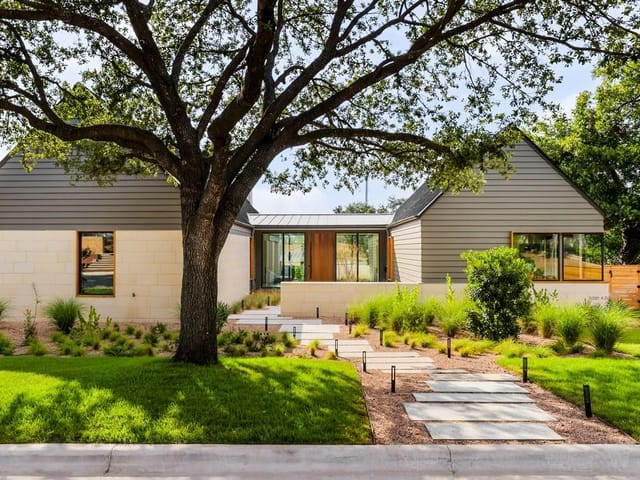
2308 Hartford Rd
Austin, TX 78703
Sunset Hill Enfield 02
MLS# 4454035 • Courtesy of ACTRIS
$7,425,000
$1,401/sqft
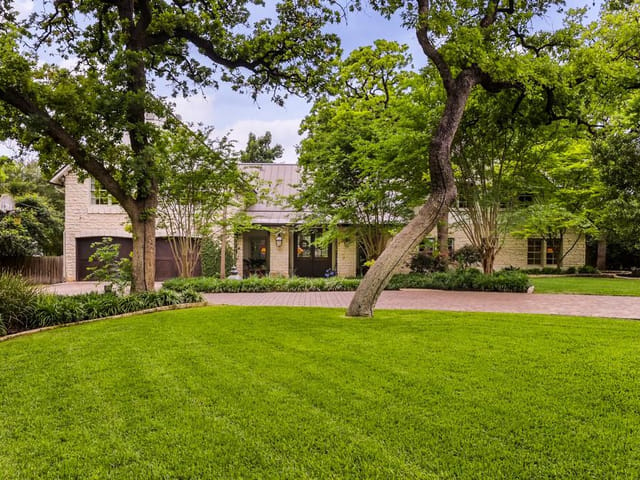
1312 Elton LN
Austin, TX 78703
Westfield A
MLS# 7271784 • Courtesy of ACTRIS
$6,740,000
$1,062/sqft

2604 Wooldridge DR
Austin, TX 78703
Pemberton Heights Sec 08
MLS# 5069346 • Courtesy of ACTRIS
$6,525,000
$998/sqft

3407 Timberwood CIR
Austin, TX 78703
Timberwood
MLS# 7766184 • Courtesy of ACTRIS
$6,500,000
$1,370/sqft