
Moving from the Bay Area to Austin: Fast Answer
For Bay Area buyers, Austin solves a specific set of problems: more house, more land, no state income tax, and access to one of the strongest public school districts in the country without a $3M+ entry price. The tradeoff is real. You lose Prop 13 protection, BART and Caltrain, coastal weather, and the density that makes Peninsula and Marin daily life walkable.
The buyers who do best in this move are the ones who stop asking "What is Austin's Palo Alto?" and start asking "Where does my Tuesday actually work?" School drop-off at 7:45, commute on MoPac or 360, grocery run at HEB, dinner on the patio instead of a restaurant - that is the daily rhythm most Bay Area transplants settle into.
Based on 25+ years of relocation work with Silicon Valley, San Francisco, and Marin buyers, Keenan Group sees the move work best when the priorities are school quality, home office space, lot privacy, and long-term equity - not a one-to-one lifestyle replacement.
Bay Area vs Austin: Cost of Living, Taxes, and Housing
| Factor | Bay Area | Austin |
|---|---|---|
| Median home price | $1.5M (San Jose), $1.53M (SF), $3.66M (Palo Alto SFR) | $655K metro, $2.4M Westlake Hills |
| State income tax | Up to 13.3% | None |
| Property tax effective rate | 0.2-0.4% for long-time owners (Prop 13), ~1.1% new buyers | ~2.0% of assessed value (reassessed annually) |
| Childcare (infant, full-time) | $26,500-$29,000/year | $12,000-$16,800/year |
| Groceries | ~15% above Austin | ~12% below national average |
| Transit | BART, Caltrain, Muni | Car-dependent (light rail 2033) |
| Overall COL | 46% higher than Austin (excl. rent) | Baseline |
The headline math: a household earning $400K in California pays roughly $35,000-$40,000 in state income tax. That disappears in Texas. But a $2.4M home in Westlake Hills generates roughly $48,000 in annual property taxes - compared to $6,000-$8,000 a long-time Palo Alto owner pays under Prop 13 protection.
The net calculation depends entirely on income level, home value, and how long you owned in California. For high earners buying in Austin's luxury tier, the income tax savings usually win. For moderate earners trading a Prop 13-protected basis, it is closer than expected.
What Austin Neighborhoods Match the Bay Area?
Bay Area buyers often ask for a direct translation. The honest answer: no Austin neighborhood replicates Peninsula life. But several neighborhoods solve the same priorities.
| If you are leaving... | Start with... | Why it maps | What does not translate |
|---|---|---|---|
| Palo Alto, Menlo Park | Westlake Hills, Rollingwood | School-driven value (Eanes ISD rated A by TEA in 2026), executive housing, established demand | Less walkable, no downtown Palo Alto equivalent |
| Cupertino, Los Altos | Westlake Hills, Northwest Hills | Strong schools, good value at lower price points | No Apple Park walking distance |
| Mountain View, Sunnyvale | Northwest Hills, Steiner Ranch | Tech commute positioning, larger homes, practical layouts | Austin tech offices are more dispersed |
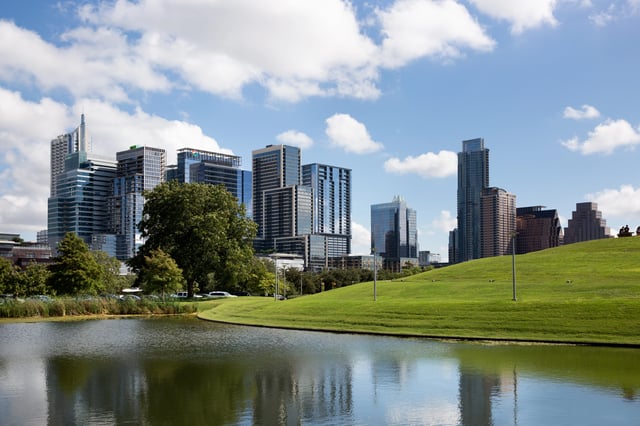
| San Francisco | Tarrytown, Clarksville, Downtown Austin | Restaurants, culture, walkability pockets, professional energy | Austin's urban core is smaller, no transit grid |
| Marin County | Lakeway, Lake Austin, Barton Creek | Hills, privacy, outdoor access, suburban rhythm, nature | No coastal weather, hotter summers |
| Atherton, Woodside | Rob Roy, Barton Creek, Spanish Oaks | Estate-scale lots, gated options, ultra-privacy | Smaller estates market, different architecture |
The most common mistake: choosing the Austin neighborhood that sounds like the Bay Area one. A Mountain View buyer may start asking about Downtown Austin because they like urban density. After they model school drop-off, parking, and weekend sports, they often end up in Northwest Hills or Westlake Hills.
Austin Housing Costs for Bay Area Buyers
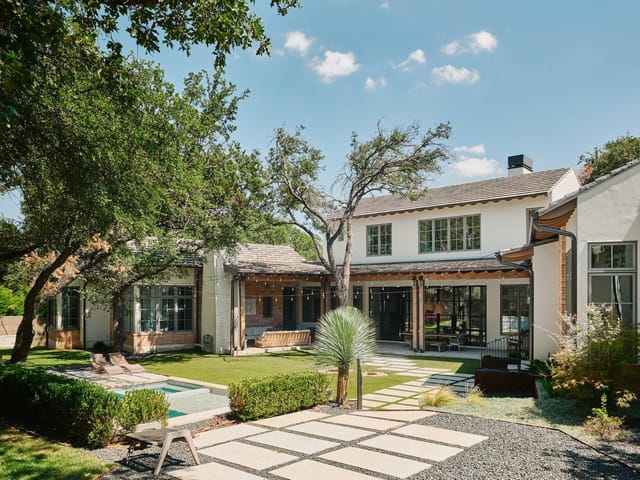
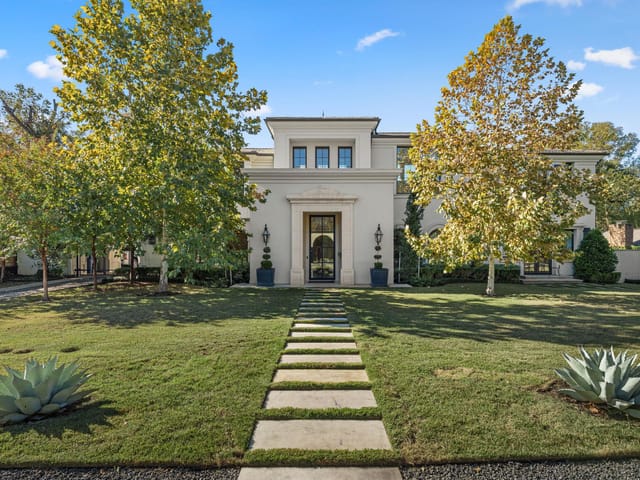
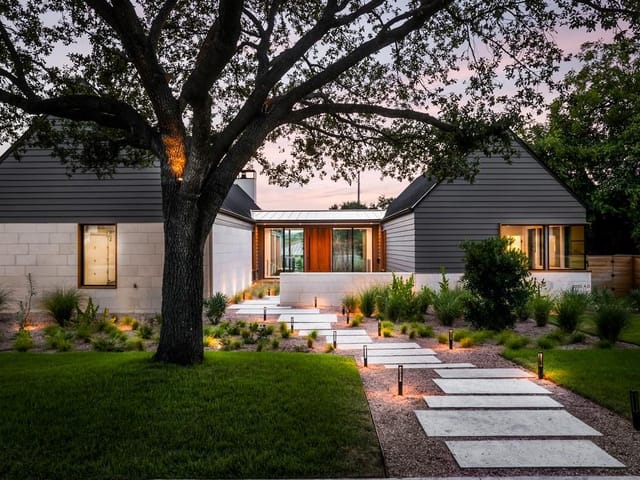
The housing advantage is usually real and significant. A Bay Area condo budget ($1.2-$1.5M) buys a detached home in most Austin luxury neighborhoods. A Palo Alto move-up budget ($2.5-$3.5M) reaches the top tier of Westlake Hills or Rollingwood - neighborhoods that would cost $5M-$8M+ in equivalent Bay Area submarkets.
But the carrying cost model matters:
| Cost category | Bay Area (Palo Alto, long-time owner) | Austin (Westlake Hills, new buyer) |
|---|---|---|
| Purchase price | $3.66M median SFR | $2.4M median |
| Annual property tax | ~$6,000-$8,000 (Prop 13, 20yr owner) | ~$48,000 (2.0% of $2.4M) |
| State income tax ($400K HHI) | ~$38,000 | $0 |
| Insurance | ~$3,000-$4,000 | ~$5,000-$8,000 (larger home, pool, trees) |
| Utilities | ~$3,600/year | ~$4,800/year (summer AC on larger home) |
| Maintenance | Lower (smaller home, milder climate) | Higher (pool, larger lot, HVAC, trees) |
For a household earning $400K+, the income tax elimination typically exceeds the property tax increase. Below $300K household income, the math is less clear - model it before you commit.
Moving from the Bay Area to Austin: Where Bay Area Buyers Land
*Anonymized client pattern from Keenan Group relocation work*
The typical Bay Area pattern starts with a household leaving the Peninsula or South Bay. They have been paying $3M+ for a 2,200 sq ft home in Palo Alto or Los Altos, tolerating the space because the schools and commute work. One or both earners now work hybrid or remote. The question becomes: why are we paying California prices for a lifestyle we are only half using?
They arrive in Austin expecting Eanes ISD to be the answer. It usually is - but not always. Some buyers discover that Northwest Hills with Anderson High and Murchison Middle delivers 80% of the school quality at 50% of the Westlake price. Others realize they want Tarrytown because the central access and walkability feel more like what they actually miss about the Bay Area.
The surprise is never the house. Bay Area buyers understand premium real estate. The surprise is the property tax line. An owner accustomed to paying $7,000/year on a $3.5M Palo Alto home (Prop 13 basis from 2010) faces $45,000-$50,000/year on a $2.3M Westlake home. The math still works for high earners - but it requires modeling before falling in love with a property.
What works well: Buyers who want Eanes ISD school quality at half the Bay Area price, buyers who need home office space and lot privacy, executives with hybrid/remote work flexibility, buyers who care about resale quality and long-term demand.
What needs care: Prop 13 loss (your effective tax rate may 5-10x), BART/Caltrain to car-dependent transition, summer heat adjustment, remodel budgets on older Austin housing stock.
The Prop 13 Decision: What Bay Area Owners Give Up
This deserves its own section because it is the #1 financial question Bay Area buyers underestimate.
If you have owned in the Bay Area for 10+ years, your Prop 13 assessed value is likely 30-60% below current market value. That creates an annual property tax savings of $15,000-$40,000 compared to what a new buyer would pay on the same home.
When you sell and buy in Texas, you lose that protection permanently. Texas reassesses at full market value every year, and the combined rate in Travis County (Austin) is roughly 2%.
The math question is simple: does the elimination of California's 9.3-13.3% state income tax exceed the loss of Prop 13 protection plus the higher Texas property tax rate?
For households earning $350K+, the answer is usually yes. For households earning $200K-$350K who have owned in California for 15+ years, the answer is genuinely close. Run the numbers before you list.
Austin Tech Jobs for Bay Area Transplants
Austin's tech ecosystem is real, but it is not the Bay Area. The major campuses:
- Apple - $1B+ campus on Parmer Lane, 3M sq ft, engineering and R&D. $240M expansion underway. New $500B AI server facility announced for Texas (2026).
- Tesla - Global HQ, Gigafactory Texas. 2,500 acres, ~16,500 employees. Austin's largest private employer.
- Google - Block 185 downtown (35-story, 804K sq ft) plus Saltillo complex in East Austin.
- Samsung - Existing Austin fab plus $37B+ Taylor fab (25km NE). $4.7B in CHIPS Act funding. 15,000+ jobs expected.
- Amazon - Tech hub at The Domain, 330K sq ft, 2,000+ tech roles.
- Oracle - Corporate campus at 2300 Cloud Way, designed for 10,000 employees.
The difference from the Bay Area: Austin tech is more dispersed. There is no Sand Hill Road, no single corridor where everything concentrates. Your office might be Parmer Lane (north), the Domain (north-central), downtown, or East Austin. Commute direction matters when choosing neighborhoods.
For remote and hybrid workers, Austin's advantage is clear: you keep the tech compensation while eliminating the Bay Area cost structure. That is the scenario where the relocation math works best.
Best Austin Schools for Bay Area Buyers
Bay Area buyers are used to school quality driving real estate decisions. Austin works the same way - the map is just different.
Eanes ISD - rated A (94) in the Texas Education Agency's 2026 accountability ratings, and Westlake High School carries a Niche A+ (as of Oct 2026). Campus ratings vary, so check the campus for your address. This is the direct comparison to Palo Alto USD. The difference: Eanes ISD access costs $2.4M in Westlake Hills vs $3.66M in Palo Alto.
Lake Travis ISD - TEA "A" rating, strong and growing. Serves Lakeway, Bee Cave, and western Travis County. Good fit for buyers who want strong schools with newer housing stock.
Austin ISD (Casis/O.Henry/Austin High path) - The Tarrytown and Bryker Woods feeder pattern. Not as uniformly ranked as Eanes, but Casis Elementary is highly regarded and the central location appeals to buyers who want walkability.
Private schools - St. Stephen's Episcopal (Niche A+, as of Oct 2026), St. Andrew's Episcopal (Niche A+, as of Oct 2026), Regents School (Niche A+, as of Oct 2026). Austin private school tuition runs $20,000-$35,000 - significantly less than Bay Area private schools ($40,000-$55,000+).
Compare districts: Eanes vs Lake Travis | Eanes vs Austin ISD
What We Tell Bay Area Clients Privately
You are not moving to cheaper California. You are moving to a different operating system. The buyers who adjust fastest are the ones who accept that.
Prop 13 loss is the biggest financial variable, and most buyers underestimate it. Model the full tax picture before you even look at houses.
Austin is a car city. Period. If your life depended on BART or Caltrain, you need to recalibrate expectations. Most Westlake Hills and Northwest Hills residents are 10-20 minutes from downtown by car - but there is no rail alternative.
Summer heat is not a talking point. It is a lifestyle factor. June through September changes how you use outdoor space. A pool, covered patio, and shade trees are not luxury features - they are infrastructure.
HEB will become part of your identity. It sounds absurd until you have been here six months. Grocery convenience matters more than anyone admits during the relocation decision.
The tech commute is real but dispersed. Apple is northwest, Tesla is southeast, Google is downtown, Samsung is Taylor. Unlike the Peninsula corridor, your Austin commute direction depends heavily on which company you work for.
Cedar season (December through February) affects some people significantly. If you have allergies, plan for it.
Do not import Bay Area neighborhood logic. A $2.4M home in Westlake Hills is not the same experience as a $3.5M home in Palo Alto - and it is not trying to be. Austin rewards buyers who choose the life they want here, not the closest approximation of the one they left.
Your First 90 Days After Moving from the Bay Area
Before you buy
Model the full monthly cost including property taxes, insurance, HOA, utilities, and maintenance. If you are losing Prop 13 protection, run the tax comparison explicitly - do not estimate.
Drive the commute to your office (or likely offices) at actual commute times. MoPac northbound at 8 AM and 360 southbound at 5 PM feel different from a Sunday test drive.
Verify the school path. Eanes ISD is the default, but Northwest Hills (Anderson/Murchison/Doss) and Tarrytown (Casis/O.Henry/Austin High) may fit better depending on location and priorities.
First 30 days
File homestead exemption. Set up utilities (Austin Energy, Texas Gas Service). Find your HEB. Establish pediatrician, dentist, vet. If you bought a larger home than you had in the Bay Area, schedule HVAC maintenance, pool service, pest control, and landscaping vendors immediately.
First 60 days
Build routines. Learn the MoPac-360-Bee Caves Road-Lamar mental map. Test school drop-off patterns. Find your coffee place and your weeknight dinner spots. This is when Bay Area transplants start discovering that Austin's food scene - while different from San Francisco - has genuine depth.
First 90 days
By 90 days, most buyers know whether they chose the right neighborhood. The school rhythm is set, the commute is habitual, and the daily life either works or exposes what was missed. The best outcome is when Austin stops being compared to the Bay Area and starts making sense on its own terms.
FAQ
Is moving from the Bay Area to Austin still worth it in 2026?
For high-income households ($350K+), the combination of state income tax elimination, lower housing costs, and Eanes ISD school access usually makes the move financially compelling. The calculation is less clear for moderate earners with long Prop 13 histories.
What surprises Bay Area buyers most about Austin?
Property taxes. An owner accustomed to paying $7,000/year under Prop 13 may face $45,000-$50,000/year on a comparable Austin home. The income tax savings usually offset this for high earners, but the sticker shock is real.
Where do Palo Alto buyers usually look in Austin?
Westlake Hills and Rollingwood are the most common starting points for buyers prioritizing Eanes ISD school quality, executive housing, and long-term resale strength. Northwest Hills offers strong value for buyers who want similar access at a lower price point.
How does Eanes ISD compare to Palo Alto schools?
Eanes ISD was rated A (94) in the Texas Education Agency's 2026 accountability ratings. The difference for buyers coming from Palo Alto: Eanes ISD access costs $2.4M in Westlake Hills vs $3.66M in Palo Alto.
Is Austin's tech job market strong enough for Bay Area professionals?
Apple, Tesla, Google, Samsung, Amazon, and Oracle all have major Austin campuses. The ecosystem is real but more dispersed than the Peninsula. Remote and hybrid workers benefit most - Bay Area compensation with Austin cost structure.
What is the biggest mistake Bay Area buyers make in Austin?
Underestimating the Prop 13 loss. The property tax increase from California to Texas can be $30,000-$40,000/year - and unlike California, Texas reassesses annually at full market value. Model this before you look at houses.
Should I sell my Bay Area home before buying in Austin?
That depends on liquidity and whether you need Bay Area equity for the Austin purchase. Many Bay Area buyers have enough liquidity to buy first, but the Prop 13 basis question matters: once you sell, that protection is gone permanently. Some sellers keep the California home as a rental to preserve the basis. Work with a CPA before deciding.
Related Austin Relocation Resources
- Moving to Austin from California - The full California relocation hub
- Moving from Los Angeles to Austin - LA-specific neighborhood and lifestyle guide
- Moving from San Diego to Austin - SD and Orange County relocation guide
- Austin Cost of Living 2026
- Texas Homestead Exemption Guide
- Eanes ISD Guide
- Westlake Hills Guide
- Northwest Hills Guide
- Home Valuation
Work With a Team That Knows the Translation
Keenan Group at Compass has helped Austin buyers and sellers for more than 25 years, with 1,000+ transactions and $1B+ in career volume. Joe and Cara Keenan bring the combination Bay Area relocation clients need: data discipline, neighborhood judgment, negotiation experience, and deep local context.
If you are moving from the Bay Area to Austin, start with the decision framework before the house hunt. We will help you compare neighborhoods, model the Prop 13 tradeoff, pressure-test schools and commute, and decide whether Austin is truly the right move.
Interested in Tarrytown?
Get a confidential market brief for Tarrytown with current inventory, pricing, and strategy recommendations from Austin's #1 team.