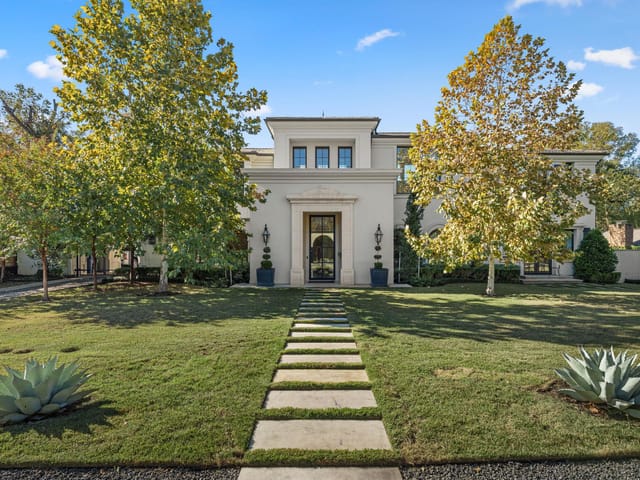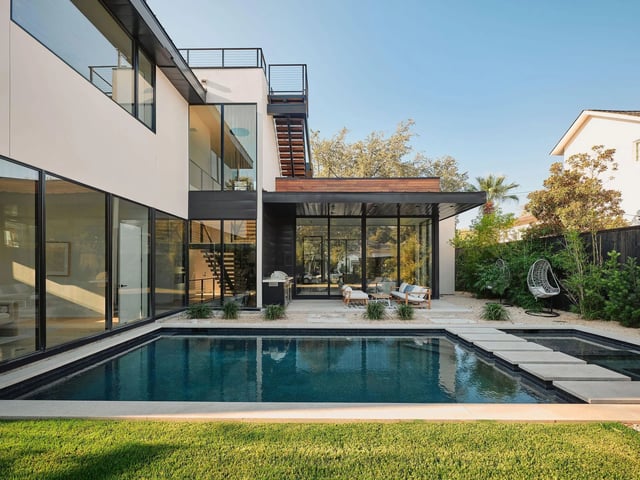

Austin's cost of living in 2026 is not a cheap-city story. It is a premium Texas market underwriting problem. Austin is more expensive than Dallas, Houston, and San Antonio, but still materially different from coastal markets for many upper-middle, executive, and luxury households because the tradeoff is not only price. It is home form, school strategy, tax structure, commute quality, neighborhood liquidity, privacy, and long-term resale depth.
This guide is built around Keenan Group's Austin luxury authority strategy, not generic affordability advice. Our SEO intelligence identifies "Austin cost of living" as a priority buyer-guide gap, with adjacent demand around luxury neighborhoods, school zones, Eanes ISD, Lake Travis ISD, relocation decisions, private clubs, luxury buyer agents, and high-income household planning. The right page has to answer those decision points together.
After 25+ years, 1,000+ clients and transactions, $1B+ in career volume, and the #1 Austin Board of Realtors Team 2024 ranking, the Keenan Group sees the same pattern repeatedly: buyers who model Austin only by national averages make weaker decisions than buyers who model neighborhood, school, tax, and resale quality together.
Fast Answer: What Does Austin Really Cost in 2026?
Austin is expensive for Texas and still compelling for the right buyer. A household moving from Dallas or Houston should expect a housing premium. A household moving from California, New York, Seattle, Chicago, or Denver should model Austin as a lifestyle and tax-structure shift, not a simple discount. The biggest variables are housing, property tax, school strategy, commute quality, insurance, utilities, and whether the neighborhood has durable buyer demand when it is time to sell.
| Household profile | Typical Austin decision | Primary cost variable | Smart next page |
|---|---|---|---|
| Upper-middle family | $800K-$1.5M home, strong schools, manageable commute | school district and monthly carry | Best Neighborhoods in Austin |
| Executive relocator | $1.5M-$3M home, privacy, commute control, private or public school | time, taxes, and neighborhood liquidity | Eanes ISD |
| Luxury buyer | $3M+ home, private inventory, waterfront, club, or estate lifestyle | basis risk and resale audience | Luxury Properties |
| Seller | pricing into a premium-but-selective market | buyer depth by neighborhood and price tier | Market Report |
Why This Page Exists in the Authority Graph
Austin cost-of-living searches are not only budget searches. They sit at the center of the buying decision:
- relocation buyers comparing Austin with coastal markets
- families deciding between Eanes ISD, Lake Travis ISD, Austin ISD, and private school
- executives deciding whether time saved is worth a higher basis
- luxury buyers comparing Westlake, Tarrytown, Barton Creek, Lake Austin, Spanish Oaks, and private club corridors
- sellers trying to understand whether Austin's premium buyer demand is still durable
That is why this guide links into the core Keenan Group authority lanes: neighborhoods, ZIPs, school districts, luxury inventory, private listings, private clubs, market reports, buyer resources, and seller resources.
The Austin Cost Stack
The most important Austin cost categories are not equal. Groceries and utilities matter, but they rarely decide a luxury or upper-middle purchase. Housing basis, property tax, schools, time, and resale quality decide the outcome.
| Cost category | Why it matters | Buyer/seller implication |
|---|---|---|
| Housing basis | Austin's premium is concentrated in specific neighborhoods and school lanes | do not compare citywide averages to neighborhood realities |
| Property tax | Texas has no state income tax, but annual property tax is a major ownership cost | model taxes before offer strategy |
| School strategy | public-school premium can replace or compete with private-school tuition | compare school premium to tuition and commute |
| Time and commute | the right road, bridge, or toll decision can protect hours every week | time has economic value for high-income households |
| Insurance and utilities | larger homes, pools, irrigation, and summer heat create real monthly costs | inspect systems and operating history before buying |
| Liquidity | strong neighborhoods keep a deeper resale audience | cheaper basis can be more expensive if exit demand is thin |
Ownership Cost by Price Tier
These are planning ranges, not mortgage quotes. The point is to show how quickly Austin's monthly reality changes once tax, insurance, maintenance, and household operations are included.
| Purchase tier | Common Austin lane | Monthly ownership planning range | What to underwrite |
|---|---|---|---|
| $800K-$1.2M | Northwest Hills, Allandale, Circle C, Lakeway, select Round Rock | $6K-$9K+ | taxes, school fit, age of systems, commute |
| $1.2M-$2M | Tarrytown entry points, Northwest Hills higher tier, Barton Hills, central Austin, Lake Travis corridors | $9K-$15K+ | lot quality, renovation scope, school strategy |
| $2M-$3.5M | Westlake Hills, Rollingwood, Barton Creek, Tarrytown, Lake Austin-adjacent | $15K-$25K+ | resale depth, privacy, architecture, school premium |
| $3.5M-$7M | Lake Austin, Spanish Oaks, Barton Creek estates, Rob Roy, private club corridors | $25K-$50K+ | private inventory, insurance, pools, landscaping, estate systems |
| $7M+ | waterfront compounds, legacy estates, ultra-private club or resort-adjacent properties | property-specific underwriting | scarcity, privacy, dock/legal due diligence, exit strategy |
Which Austin buyer are you?
Middle, Upper-Middle, and Luxury Austin Are Different Markets
Austin has one city name but several cost structures. A $900K purchase in Northwest Austin, a $1.8M Eanes ISD purchase, a $3M Barton Creek estate, and a $6M Lake Austin waterfront home should not be analyzed with one "cost of living" average.
| Market lane | Typical buyer question | Cost-of-living reality |
|---|---|---|
| Middle/upper-middle Austin | Can we get schools, space, and a reasonable commute without overextending? | monthly carry, taxes, childcare, and school geography dominate |
| Premium family Austin | Is the school-zone premium worth it? | Eanes and Lake Travis pricing can be rational if it replaces private school and protects resale |
| Central luxury | Is proximity worth the smaller lot or older home? | Tarrytown, Pemberton, Clarksville, Old Enfield, and Bryker Woods are time-and-location purchases |
| West Austin luxury | Is privacy, schools, and Hill Country access worth the basis? | Westlake, Rollingwood, Barton Creek, Rob Roy, and Lost Creek trade on schools, privacy, and long-term demand |
| Waterfront/club luxury | Is the lifestyle asset underwritten correctly? | docks, club access, private roads, HOAs, insurance, and scarcity matter more than generic price per foot |
Austin vs Other Texas Cities
Austin is the premium Texas housing market. Dallas and Houston often offer more house for the money. San Antonio is meaningfully less expensive. Austin earns its premium when the buyer values tech-market access, outdoor lifestyle, neighborhood identity, school lanes, and long-term demand more than maximum square footage.
| Decision factor | Austin | Dallas | Houston | San Antonio |
|---|---|---|---|---|
| Housing cost | highest major Texas premium | lower than Austin, broad suburb depth | lower than Austin, more inventory | lowest of the major metros |
| Career fit | tech, startups, government, creative | corporate HQ, finance, logistics | energy, medicine, ports, global business | military, healthcare, value lifestyle |
| School premium | concentrated in Eanes, Lake Travis, top AISD zones | broader suburban school options | broad but more dispersed | lower-cost family options |
| Lifestyle | outdoor, Hill Country, lakes, music, restaurants | polished metro scale, sports, airports | global city scale, food | historic, lower cost, slower pace |
| Best for | buyers who value Austin-specific lifestyle and demand | buyers maximizing house and school options | buyers needing affordability and industry depth | buyers prioritizing value |
Austin vs Coastal Relocation Markets
For high-income households, Austin's cost story is usually about total after-tax life and housing form. The same budget that buys a smaller or less private property in California or New York can often buy more land, newer systems, a pool, better indoor-outdoor living, and a different family rhythm in Austin.
| Relocation origin | Austin advantage | Austin risk to model |
|---|---|---|
| California | no state income tax, more housing form, lower entry to estate lifestyle | property tax, summer utilities, less transit |
| New York | more space, lower private-home basis, no city/state income tax | car dependence, summer heat, school strategy |
| Seattle | lower tax burden, more sun, more land at many tiers | property tax and summer cooling |
| Chicago | weather, tax structure, job-market migration, outdoor lifestyle | school geography and neighborhood fit |
| Denver | tech overlap, lower state-tax burden, different lifestyle proposition | Austin housing premium versus some Denver suburbs |
Moving to Austin? We wrote the guide for your city.
School Strategy Is a Cost-of-Living Decision
School choice is one of Austin's largest hidden cost levers. It affects home price, commute, resale, private tuition exposure, and the number of neighborhoods that realistically fit.
| School path | Where buyers look | Cost implication |
|---|---|---|
| Eanes ISD | Westlake Hills, Rollingwood, Rob Roy, Lost Creek, Davenport Ranch | high home basis, strong resale depth, public-school premium |
| Lake Travis ISD | Lakeway, Bee Cave, Spanish Oaks, Rough Hollow, Serene Hills, Flintrock Falls | strong family/luxury lane, more suburban and lake-oriented |
| Austin ISD premium zones | Tarrytown, Northwest Hills, Bryker Woods, Barton Hills, Allandale | centrality and school-by-address diligence matter |
| Private school strategy | Central Austin, West Austin, Northwest Austin | can widen the neighborhood map, but tuition and commute replace part of the public-school premium |
Compare school-zone premium against private-school tuition, commute, and resale depth. The "cheaper" house can be less efficient if it adds two tuitions and a daily cross-town drive.
Compare Austin school districts side by side
Neighborhood Cost Bands and Ownership Logic
The strongest Austin decisions start with neighborhood fit, then move to the house. The wrong order creates expensive compromises.
| Neighborhood or lane | Typical cost signal | Why buyers pay for it |
|---|---|---|
| Westlake Hills / 78746 | luxury core | Eanes ISD, privacy, Hill Country, central access |
| Rollingwood | luxury core | Eanes ISD plus closer-in daily life |
| Tarrytown / 78703 | historic central luxury | Lake Austin proximity, Casis/O. Henry/Austin High lane, scarce lots |
| Northwest Hills / 78731 | premium family/value | schools, central access, larger homes than many central neighborhoods |
| Barton Creek / 78735 | gated/golf luxury | privacy, club lifestyle, estate inventory |
| Lakeway / 78734 | lake and family lifestyle | Lake Travis ISD, lake access, more space |
| Bee Cave / 78738 | Lake Travis growth corridor | schools, newer homes, Spanish Oaks and club-adjacent demand |
| Allandale / Brentwood / Crestview | central upper-middle | access, restaurants, mature neighborhoods, better basis than prime 78703/78746 |
Find your Austin neighborhood
Pricing, schools, and lifestyle for 59 Austin neighborhoods.
Cost Decisions That Matter for Upper-Middle and Luxury Austin Buyers
- Buy time when it protects your week. Austin traffic is real, but the answer is not automatically avoiding tolls. For many executives, physicians, founders, attorneys, and dual-income households, the toll road is worth it if it protects school pickup, client meetings, dinner at home, or 30-45 minutes a day. Model commute quality as part of the home budget.
- Separate home price from total carrying cost. A $1.5M home and a $2.5M home can feel very different once property taxes, insurance, HOA dues, utilities, pool care, landscaping, repairs, and renovation needs are included. In Austin, the monthly number matters more than the headline purchase price.
- Price the school strategy before choosing the house. Eanes ISD and Lake Travis ISD carry a real real-estate premium. For some families, that premium is rational because it replaces private-school tuition and protects resale demand. For others, a Central Austin or Northwest Austin home plus private school may be the better lifestyle fit.
- Use neighborhood liquidity as a cost variable. The "cheaper" home is not always the better buy. Westlake Hills, Rollingwood, Tarrytown, Northwest Hills, Barton Creek, Lake Austin, and the strongest Lake Travis corridors tend to hold demand because they combine location, schools, lot quality, privacy, and long-term buyer depth.
- Underwrite taxes like an owner, not a renter. Texas has no state income tax, which can be a major advantage for high-income households. But Austin-area property taxes are still one of the largest recurring ownership costs. File the homestead exemption immediately after closing, and review property tax protest strategy annually.
- Account for the house itself. Larger Austin homes often carry meaningful operating costs: summer cooling, irrigation, pool service, tree work, roof exposure, drainage, pest control, and ongoing maintenance. A well-sited, well-maintained home can cost less to own than a larger discount property with deferred work.
- Do not optimize groceries while ignoring basis risk. H-E-B is a real quality-of-life advantage, but grocery savings are not what move the needle for luxury buyers. The larger financial decisions are neighborhood basis, school-zone premium, tax exposure, renovation scope, and future resale audience.
- Compare Austin against the city you are actually leaving. Austin is expensive relative to most of Texas, but still materially different from coastal markets for many high-income relocators. The right analysis is not "Austin vs national average." It is Austin vs San Francisco, Los Angeles, New York, Chicago, Seattle, Denver, or Dallas for your income, housing target, tax picture, and lifestyle.
Property Taxes and the No-Income-Tax Tradeoff
The Texas tax structure rewards some households more than others. Higher-income households often benefit more from no state income tax, especially when the home price is disciplined relative to income. Households stretching into a larger purchase need to be more careful because property tax and insurance can erase the emotional comfort of a lower mortgage-only number.
| Household pattern | Tax takeaway |
|---|---|
| High income, disciplined home price | Texas structure can be highly favorable |
| High income, major luxury home | still favorable, but annual property tax must be planned like a fixed operating cost |
| Moderate income, expensive home | less margin for error because taxes consume more monthly cash flow |
| Retiree or fixed income | homestead and over-65 rules can matter materially, but planning is address-specific |
Use the Austin Property Tax Rates 2026 guide, Texas Homestead Exemption Guide, and Central Texas Property Tax Protest Guide before finalizing neighborhood or offer strategy.
Transportation: Time Is a Budget Line
Austin is car-led. That does not mean every commute is equal, and it does not mean the cheapest route is the best route. For many upper-income buyers, the correct decision is to pay for the faster route, choose a more strategic neighborhood, or buy closer to the school/work triangle.
| Commute choice | What it really costs |
|---|---|
| cheaper house, longer commute | gas, tolls, time loss, school pickup risk, lower daily quality |
| closer-in house, higher basis | more capital tied to location, but better week-to-week efficiency |
| toll road usage | often worth it when it protects professional time or family rhythm |
| school/work triangle | usually more important than distance on a map |
Keenan Group's practical test: drive the commute during real school drop-off and evening rush hour before writing the offer.
Utilities, Insurance, and Operating Costs
Austin's larger homes can surprise buyers who are used to smaller coastal housing. Pools, irrigation, older HVAC, tree cover, window quality, and west-facing exposure all change monthly cost.
| Operating item | Why it matters |
|---|---|
| HVAC age and zoning | summer comfort and utility cost |
| pool and outdoor systems | monthly service plus repairs |
| irrigation and drainage | Austin soil, slopes, and heat make this more important than buyers expect |
| roof and tree canopy | shade helps, but large trees also need care |
| insurance | age, roof, claims history, and property type affect premiums |
| HOA or club dues | can be rational if they replace other lifestyle costs, but must be modeled |
If your home is efficient, well-maintained, and has clean operating history, document it. In a premium market, lower friction can become a pricing advantage.
Luxury Buyer Framework
Luxury Austin buyers should treat cost of living as an investment and lifestyle underwriting exercise, not a coupon exercise.
| Buyer question | What to verify |
|---|---|
| Is the neighborhood premium durable? | historic demand, school lane, privacy, scarcity, buyer depth |
| Is the home over-improved or under-improved? | renovation scope, architecture, lot quality, replacement cost |
| Is the lifestyle asset real? | dock, club, view, walkability, school proximity, privacy |
| Is the exit audience deep enough? | future buyer pool at this price point |
| Is private inventory relevant? | Private Exclusive Listings, Private Austin Listings, and Compass network exposure |
For $3M+ buyers, pair this guide with Luxury Properties, Private Exclusive Listings, Austin Private Clubs Luxury Real Estate Guide, and the Austin Luxury Market Forecast.
For $3M+ buyers: private network access
Compass Private Exclusives, off-market listings, and pocket inventory not available on public sites.
Seller Framework: Why Cost of Living Matters to Pricing
Sellers should care about this topic because buyers are underwriting monthly carry more carefully. Higher rates, property taxes, insurance, renovation costs, and school strategy all affect what buyers can pay and how confidently they can move.
| Seller issue | Pricing implication |
|---|---|
| high tax basis | buyers may focus on monthly payment, not just list price |
| older systems | buyers discount for operating risk |
| strong school lane | supports buyer depth when priced correctly |
| poor commute story | narrows the audience |
| documented improvements | reduces uncertainty and protects premium positioning |
For a seller-specific view, start with Home Valuation, Austin CMA, and the current Market Report.
Recommended Internal Decision Path
If you are researching Austin costs before a move or sale, use this sequence:
- Read this page for total monthly reality.
- Use Best Neighborhoods in Austin to narrow the lifestyle lane.
- Compare schools through Eanes ISD, Lake Travis ISD, and Austin ISD.
- Use 78746, 78703, 78731, 78732, and 78738 for ZIP-level market context.
- Review Luxury Properties, Private Exclusive Listings, and Market Report when the search becomes serious.
FAQ
Is Austin expensive in 2026?
Yes. Austin is expensive relative to the rest of Texas and especially expensive in top school, central, waterfront, golf, and luxury corridors. It can still be compelling for high-income relocators and luxury buyers when taxes, housing form, school strategy, lifestyle, and resale demand are modeled together.
Is Austin cheaper than California or New York?
Often, but not automatically. Many high-income households moving from California or New York benefit from Texas's no-state-income-tax structure and more attainable estate-style housing. The main Austin costs to model are property tax, insurance, utilities, commute pattern, and school strategy.
Is Austin cheaper than Dallas or Houston?
No. Austin is usually more expensive than Dallas, Houston, and San Antonio, primarily because of housing. Buyers pay the Austin premium for tech-market access, outdoor lifestyle, central neighborhoods, Hill Country proximity, school lanes, and long-term demand in specific neighborhoods.
How much income do you need to live well in Austin?
It depends on home price, school strategy, and debt profile. A household buying in the $800K-$1.2M range has a very different monthly reality than a household buying in Westlake, Tarrytown, Barton Creek, or Lake Austin. The smarter question is whether the target neighborhood and monthly carry fit your long-term plan.
What is the biggest hidden Austin cost for buyers?
For most buyers, it is the combination of property taxes, insurance, and operating costs on larger homes. For many high-income households, time is also a hidden cost: commute quality, school logistics, and daily route friction can be worth more than small line-item savings.
Are Eanes ISD and Lake Travis ISD worth the premium?
They can be, especially when public-school quality, resale depth, and family lifestyle are central to the decision. But the premium should be compared against private-school tuition, commute, home quality, and the buyer's actual daily life.
Should luxury buyers worry about Austin cost of living?
Yes, but differently. Luxury buyers are usually not deciding based on grocery or toll costs. They should underwrite neighborhood liquidity, annual carry, taxes, insurance, renovation exposure, private inventory, club or waterfront complexity, and exit audience.
How should Austin sellers use cost-of-living data?
Sellers should understand that buyers are underwriting total monthly carry. Homes with strong school geography, documented improvements, efficient operating history, and clear lifestyle value are easier for buyers to justify at premium pricing.
Related Resources
- Best Neighborhoods in Austin
- Most Expensive Neighborhoods in Austin
- Austin Property Tax Rates 2026
- Texas Homestead Exemption Guide
- Central Texas Property Tax Protest Guide
- Austin vs Dallas for Homebuyers
- Moving to Austin from California
- Moving to Austin from New York
- Eanes ISD
- Lake Travis ISD
- Luxury Properties
- Private Exclusive Listings
- Austin Pocket Listings & Off-Market Access
- Market Report
For a household-specific Austin cost-of-living and ownership analysis, contact Joe and Cara Keenan at (512) 415-7653. The right answer is not a citywide average. It is a neighborhood, school, commute, tax, and resale strategy.