 #1 Austin Board of Realtors Team 2024#1 Austin Board of Realtors Team 2024
This property has sold on September 25, 2019. Looking for something similar? Contact us or browse available homes.
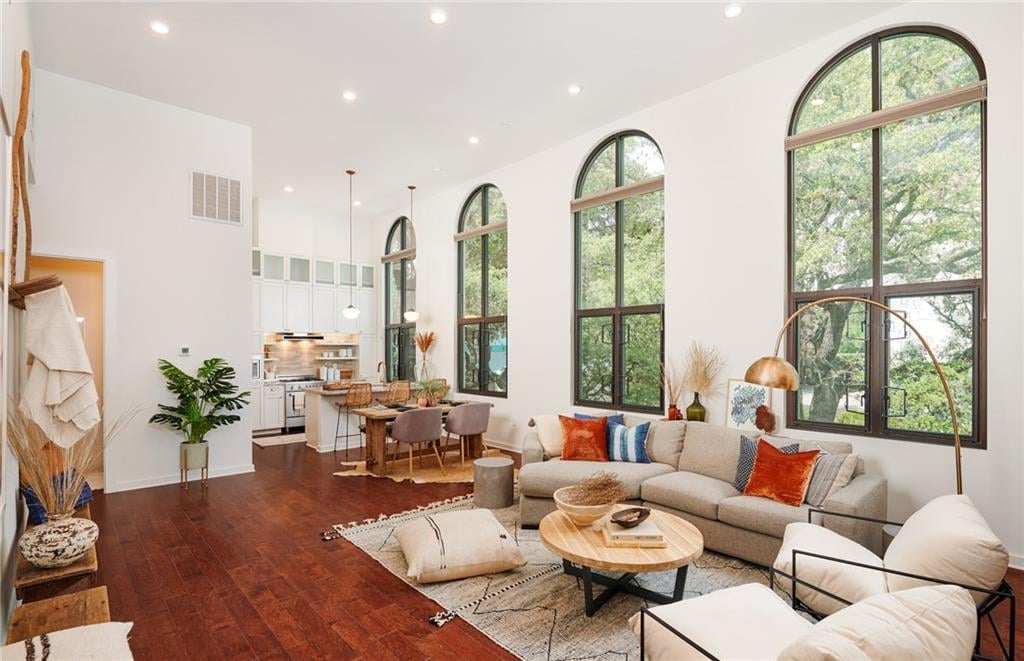
Per MLS rules, only the primary photo is shown for non-Keenan closed listings.
This property is no longer actively listed. We can help you find similar homes currently for sale, notify you if this property relists, or explore off-market opportunities in the area.
Why you're seeing this property: Unlike major portals that hide off-market listings, we maintain the most comprehensive Austin property database. View market history, neighborhood data, and discover similar homes currently for sale. #1 Austin Realtor Team 2024.
2 bed, 2 bath, 1,889 sqft in Bouldin Creek. Austin, TX 78704. Last listed at $859,000, sold September 25, 2019. Austin ISD.
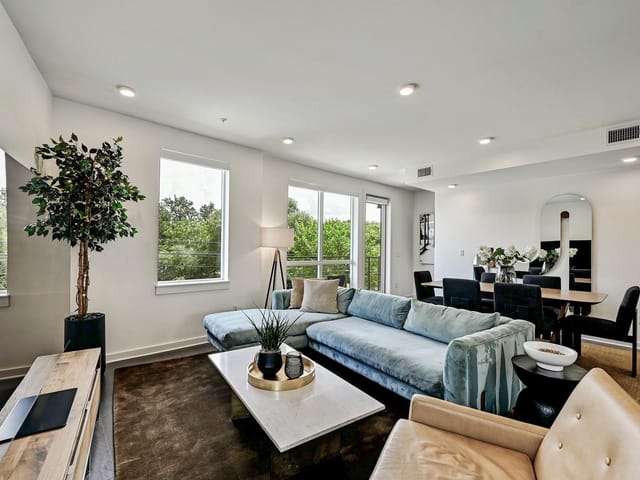
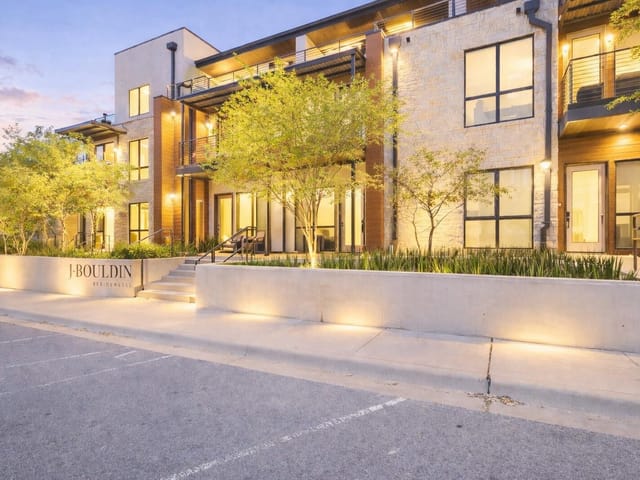
Rare opportunity to own an historic, one-of-a-kind piece of architecture in South Austin. 1940 Mission Revival Church converted into loft residences featuring 15' ceilings and 11' arched, newly renovated windows. Grand stairway and arched entry. Surrounded by over-sized Heritage Oaks. Original limestone exterior & hand-engraved details. Brand new modern interior finish-out. One block off S. Congress in the heart of the Bouldin neighborhood. This is the perfect opportunity for buyers with discerning taste.
Bouldin Creek has more James Beard Award nominees per block than any neighborhood in Texas. That is not an exaggeration you would find in a tourism brochure. It is a reflection of what happens when a formerly working-class neighborhood south of the river becomes the center of gravity for Austin's most ambitious restaurant talent while somehow keeping its tree-lined streets and quirky residential character intact.
The neighborhood occupies the triangle between South First Street, South Congress Avenue, and Oltorf Street in the 78704 zip code, with Lady Bird Lake forming its northern boundary. Downtown Austin is literally across the bridge. You can walk to the lake in five minutes, bike downtown in ten, and reach Austin-Bergstrom airport in about 20 minutes. Zilker Park and Barton Springs Pool are immediately to the west. The South Congress shopping and dining corridor runs along the eastern edge, which means you live adjacent to one of Austin's biggest tourist draws without actually being in the middle of it.
The housing stock tells the story of the neighborhood's evolution. About 35 percent of the homes are original Austin bungalows and Craftsman cottages from the 1910s through 1940s, many of them lovingly maintained or thoughtfully updated. Another 30 percent are modern custom builds from 2010 forward, the kind with clean lines, rooftop decks, and walls of windows that signal serious architectural intent. Mid-century ranch homes account for 15 percent, and you will find a scattering of L-plan cottages, contemporary townhomes, and duplex conversions filling the remaining gaps. Lot sizes are modest by Austin standards, typically a tenth of an acre or less for the older homes. Prices range from around $600,000 for a smaller bungalow needing work to well over $2 million for a new-construction modern on a corner lot. The price per square foot is among the highest in South Austin because you are paying for location as much as the structure.
Bouldin Creek falls within Austin ISD. The neighborhood school is Becker Elementary, with Fulmore Middle School and Travis High School serving the older grades. Austin ISD has faced enrollment challenges citywide, and some families in Bouldin do opt for private or charter alternatives. That said, Becker has an engaged parent community and a strong neighborhood identity. The proximity to UT Austin also means access to university-affiliated programs and resources that benefit the broader area.
The lifestyle here is defined by walkability and the density of independent businesses within a few blocks of home. Mornings might start at Bouldin Creek Cafe, the longstanding vegetarian spot that has been a neighborhood anchor for decades, or Elizabeth Street Cafe for Vietnamese coffee and pastries. Lunch could be Home Slice Pizza on South Congress or a smoked brisket plate at Terry Black's. For dinner, you are choosing between Lenoir's hot-weather food concept, Odd Duck's ever-changing farm-to-table menu, or Perla's patio for oysters and people-watching. On weekends, Barton Springs Pool is the communal living room. The West Bouldin Creek Greenbelt provides a shaded walking loop, and Zilker Park hosts everything from kite festivals to trail running. The neighborhood still has a strong creative identity, with working artists, musicians, and small business owners living alongside tech professionals and young families.
Bouldin Creek sits at a unique intersection in Austin's market. It is more expensive than Travis Heights to the east and Galindo to the south, but it delivers walkability and dining access that neither can match. Compared to Zilker, the lots are smaller but the neighborhood feel is stronger. Compared to Clarksville north of the river, you get a similar village character at a slightly lower price point with better restaurant density. The key distinction is that Bouldin is genuinely walkable to both Lady Bird Lake and South Congress without requiring a car, which is rare in Austin.
Bouldin Creek makes the most sense for buyers who prioritize daily walkability over square footage. If eating at a different excellent restaurant every night of the week without starting your car sounds like the right way to live, this is your neighborhood. It works well for couples, professionals, and smaller families who want to be in the center of Austin's food and cultural scene while still having a quiet, residential street to come home to. Larger families who need significant yard space or top-tier public school ratings may want to look further south or west, but for everyone else, this is as close to urban village living as Austin gets.
School District: Austin ISD
View Bouldin Creek neighborhood guideVerified property facts
211 W Johanna St Unit #1 is zoned for Austin ISD with assigned schools: Travis Hts (elementary), Fulmore (middle), Travis (high). School assignments should be verified directly with the district.
211 W Johanna St Unit #1 is a Residential built in 2018 featuring 2 bedrooms, 2 full, 1 half bathrooms, 1,889 square feet, 0.00-acre lot.
211 W Johanna St Unit #1 was last listed at $455 per square foot across 1,889 sqft. The Bouldin Creek neighborhood guide reference price is $1,144,000 (Bouldin Creek neighborhood guide · reference price).
The most recent annual property tax for 211 W Johanna St Unit #1 is $19,022. Texas has no state income tax, so property taxes are a primary revenue source. Rates vary by jurisdiction and exemptions. Verify current amounts with the county appraisal district.
#1 Austin Board of Realtors Team. 1,000+ homes sold and $1B+ in career sales over 25+ years in Austin.
25+ years advising buyers and sellers in this community
Listing information last updated January 22, 2021.
Listed by The Brandon Miller Group, LLC
MLS# 4291947 • Closed
IDX inquiries: Keenan Group at Compass · (512) 415-7653
Properties displayed may be listed or sold by various participants in the MLS.
1 record on file
Every recorded listing, sale, and lease at 211 W Johanna ST Unit #1, whoever represented it.
Prices shown are list prices. Closed sale prices are available to registered clients in accordance with ACTRIS rules.
Listing timeline with current price, original ask, and market time.
Public record data from county appraisal records. Market value can differ from assessed value.
| Year | Taxes | Total Assessment | Land | Additions |
|---|---|---|---|---|
2025-22.5% | — | $1,101,253 | — | — |
2024+49.5% | — | $1,420,437 | $279,225 | $742,758 |
2023+14.7% | — | $950,000 | $279,225 | $1,141,212 |
2022+2.5% | — | $828,400 | $2,792 | $947,208 |
2021 | — | $808,230 | $132,965 | $695,435 |
Zoned assignments come from the property school fields available to us. District context schools are shown only when an assigned tier is missing. Contact the school district directly to verify current boundaries and enrollment eligibility.
Excluded from this estimate: property taxes and home insurance. Each requires verified amount, cadence or unit, source, and as-of details.
HOA source: MLS Grid / Unlock MLS, as of 2026-04-25T02:51:50.833075+00:00; normalized from monthly dues.
20% ($172K)
Adjustable assumption - not a lending recommendation.
$859,000
Luxury property intelligence
A sourced read on Bouldin Creek pricing, timing, and property scale. No automated valuation claim.
List price
$859,000
Price per sqft
$455/sqft
Vs. Neighborhood guide reference price
-24.9%
$1.1M · Bouldin Creek neighborhood guide · reference price
Days on market
Not available
Original to current
No verified reduction
$859K original
Active inventory context
22 listings
Price Position in Bouldin Creek
Listed 25% below the Bouldin Creek neighborhood guide reference price. Bouldin Creek neighborhood guide · reference price.
Source: MLS Grid / Unlock MLS and Keenan Group review as of Apr 25, 2026.
Request Private Market AnalysisLifestyle, schools, market context, and homes in Bouldin Creek
Active listings and buyer search context in Bouldin Creek
ZIP-level neighborhoods, schools, lifestyle, and Austin market context
District guide, nearby schools, and homes by attendance area
Private Austin CMA, TCAD context, and pricing strategy
Pricing, prep, launch timing, and Compass marketing strategy
#1 ABOR Team 2024 with $1B+ career sales volume
211 W Johanna St Unit #1 was last listed at $859,000 and sold on September 25, 2019. The current MLS snapshot shows 127 active listings in 78704. Keenan Group has completed 49 verified transactions in 78704 within its 1,000+ completed transactions and $1B+ career volume across Austin. See Keenan Group's Bouldin Creek guide for current neighborhood analysis.
211 W Johanna St Unit #1 was built in 2018, making it 8 years old with relatively recent construction.
The MLS listing reports HOA or association dues of $322 monthly for 211 W Johanna St Unit #1. It does not establish included amenities, services, rules, reserves, or current assessments; verify those items in current association documents.
Answers use visible listing facts, school context, and neighborhood data available on this page. Verify time-sensitive details before making decisions.
Bouldin Creek is one of Austin's established neighborhoods, zoned for Austin ISD in the 78704 area. The Keenan Group has specialized in Bouldin Creek real estate for 25+ years with 1,000+ career transactions. Contact (512) 415-7653 for current market conditions and available homes.
Source: Keenan Group at Compass Real Estate, #1 Austin Board of Realtors Team (2024)
Homes sold by Keenan Group.
| Address | Offered At |
|---|---|
| 2505 Bluebonnet LN Unit #15 | $799K |
| 706 E Monroe ST | $975K |
| 2601 Del Curto RD Unit #106 | $475K |
| 1201 S 6th ST | $790K |
| 1401 EVA ST Unit #402 | $650K |
| 2306 Arpdale St #B | $600K |
| 2705 Tether Trl | $1.15M |
| 307 W Annie St | $1.13M |
7 events on record
Current Price
$859,000
Timeline data compiled from MLS records and public records. Information deemed reliable but not guaranteed.
| Year | Taxes | Total Assessment | Land | Additions |
|---|---|---|---|---|
2025-22.5% | — | $1,101,253 | — | — |
2024+49.5% | — | $1,420,437 | $279,225 | $742,758 |
2023+14.7% | — | $950,000 | $279,225 | $1,141,212 |
2022+2.5% | — | $828,400 | $2,792 | $947,208 |
2021 | — | $808,230 | $132,965 | $695,435 |
Timeline merges MLS activity (when permitted) with public records. Some details may be restricted to registered VOW clients.
Very Walkable
Some Transit
Very Bikeable
Walk Score measures walkability based on distance to amenities. Transit Score measures public transportation access. Bike Score measures bikeability based on bike infrastructure and terrain.
Near This Home
Active listings in the same neighborhood or ZIP search area. More homes in Bouldin Creek
Neighborhood guide and local insights
Bouldin Creek has more James Beard Award nominees per block than any neighborhood in Texas. That is not an exaggeration you would find in a tourism brochure. It is a reflection of what happens when a formerly working-class neighborhood south of the river becomes the center of gravity for Austin's most ambitious restaurant talent while somehow keeping its tree-lined streets and quirky residential character intact. The neighborhood occupies the triangle between South First Street, South Congress Avenue, and Oltorf Street in the 78704 zip code, with Lady Bird Lake forming its northern boundary. Downtown Austin is literally across the bridge. You can walk to the lake in five minutes, bike downtown in ten, and reach Austin-Bergstrom airport in about 20 minutes. Zilker Park and Barton Springs Pool are immediately to the west. The South Congress shopping and dining corridor runs along the eastern edge, which means you live adjacent to one of Austin's biggest tourist draws without actually being in the middle of it. The housing stock tells the story of the neighborhood's evolution. About 35 percent of the homes are original Austin bungalows and Craftsman cottages from the 1910s through 1940s, many of them lovingly maintained or thoughtfully updated. Another 30 percent are modern custom builds from 2010 forward, the kind with clean lines, rooftop decks, and walls of windows that signal serious architectural intent. Mid-century ranch homes account for 15 percent, and you will find a scattering of L-plan cottages, contemporary townhomes, and duplex conversions filling the remaining gaps. Lot sizes are modest by Austin standards, typically a tenth of an acre or less for the older homes. Prices range from around $600,000 for a smaller bungalow needing work to well over $2 million for a new-construction modern on a corner lot. The price per square foot is among the highest in South Austin because you are paying for location as much as the structure. Bouldin Creek falls within Austin ISD. The neighborhood school is Becker Elementary, with Fulmore Middle School and Travis High School serving the older grades. Austin ISD has faced enrollment challenges citywide, and some families in Bouldin do opt for private or charter alternatives. That said, Becker has an engaged parent community and a strong neighborhood identity. The proximity to UT Austin also means access to university-affiliated programs and resources that benefit the broader area. The lifestyle here is defined by walkability and the density of independent businesses within a few blocks of home. Mornings might start at Bouldin Creek Cafe, the longstanding vegetarian spot that has been a neighborhood anchor for decades, or Elizabeth Street Cafe for Vietnamese coffee and pastries. Lunch could be Home Slice Pizza on South Congress or a smoked brisket plate at Terry Black's. For dinner, you are choosing between Lenoir's hot-weather food concept, Odd Duck's ever-changing farm-to-table menu, or Perla's patio for oysters and people-watching. On weekends, Barton Springs Pool is the communal living room. The West Bouldin Creek Greenbelt provides a shaded walking loop, and Zilker Park hosts everything from kite festivals to trail running. The neighborhood still has a strong creative identity, with working artists, musicians, and small business owners living alongside tech professionals and young families. Bouldin Creek sits at a unique intersection in Austin's market. It is more expensive than Travis Heights to the east and Galindo to the south, but it delivers walkability and dining access that neither can match. Compared to Zilker, the lots are smaller but the neighborhood feel is stronger. Compared to Clarksville north of the river, you get a similar village character at a slightly lower price point with better restaurant density. The key distinction is that Bouldin is genuinely walkable to both Lady Bird Lake and South Congress without requiring a car, which is rare in Austin. Bouldin Creek makes the most sense for buyers who prioritize daily walkability over square footage. If eating at a different excellent restaurant every night of the week without starting your car sounds like the right way to live, this is your neighborhood. It works well for couples, professionals, and smaller families who want to be in the center of Austin's food and cultural scene while still having a quiet, residential street to come home to. Larger families who need significant yard space or top-tier public school ratings may want to look further south or west, but for everyone else, this is as close to urban village living as Austin gets.
Looking for more homes in Bouldin Creek?
Contact an Expert →Active listings near 211 W Johanna St Unit #1
Recent sales for market context