 #1 Austin Board of Realtors Team 2024#1 Austin Board of Realtors Team 2024
This property has sold on April 26, 2024. Looking for something similar? Contact us or browse available homes.
512 E 46th ST
Austin, TX, 78751
Per MLS rules, only the primary photo is shown for non-Keenan closed listings.
This property is no longer actively listed. We can help you find similar homes currently for sale, notify you if this property relists, or explore off-market opportunities in the area.
Why you're seeing this property: Unlike major portals that hide off-market listings, we maintain the most comprehensive Austin property database. View market history, neighborhood data, and discover similar homes currently for sale. #1 Austin Realtor Team 2024.
2 bed, 1 bath, 1,161 sqft on 0.12 acres in Hyde Park. Austin, TX 78751. Last listed at $700,000, sold April 26, 2024. Austin ISD.
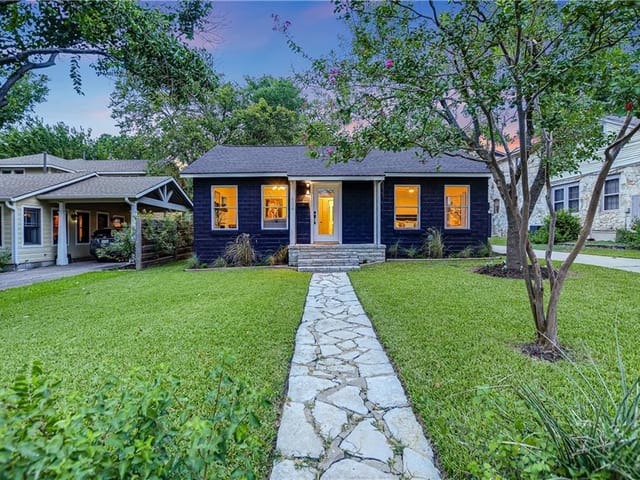
This delightful 1952 bungalow, nestled on a picturesque corner lot in the coveted Hyde Park neighborhood, spans 1,161 square feet.
Hyde Park was platted in 1891 as Austin's first planned suburban development, and it still has the original Moonlight Tower on Avenue G - one of only 15 surviving moonlight towers in the world and the only ones still in operation. That piece of infrastructure, unchanged for over a century, represents how Hyde Park relates to its own history. People do not just preserve old things here for show. They live in and around them every day.
Hyde Park occupies a compact rectangle between Guadalupe on the west, Duval on the east, 38th Street on the south, and 45th on the north, immediately north of UT and about two miles from the Capitol. Downtown is a 10-minute drive or 15-minute bike ride. North Loop Boulevard along the northern edge has developed into a strip of vintage shops, record stores, and small restaurants. The I-35 corridor sits a few blocks east for highway access, though most residents orient their lives west and south.
The housing stock makes Hyde Park architecturally distinct. Craftsman Bungalows account for roughly 40%, with low-pitched roofs, wide front porches, exposed rafter tails, and tapered columns. Victorian and Queen Anne styles make up 20%, with ornamental woodwork and bay windows. Tudor homes represent 15%, adding steep gables and decorative half-timbering. Most single-family homes range from 1,000 to 2,000 square feet on lots between 5,000 and 7,500 square feet - small by suburban standards but appropriate for 1890s design where front porches functioned as social space. Unrenovated bungalows start in the mid-$500s. Renovated homes sell between $750,000 and $1.2 million.
Hyde Park falls within Austin ISD. Lee Elementary serves most of the neighborhood and benefits from active parent involvement. Lamar Middle School and McCallum High School complete the feeder pattern. McCallum has a well-regarded Fine Arts Academy drawing students districtwide. The proximity to UT creates informal educational benefits - kids grow up walking past the university and attending campus events.
The lifestyle centers on front porches, coffee shops, and genuine walkability. Morning routines start at Epoch Coffee on North Loop or Quack's 43rd Street Bakery. Hyde Park Bar and Grill - the one with the giant fork sculpture - has been an institution since 1982. Foreign and Domestic brings ambitious seasonal cooking to North Loop. Asti Trattoria handles Italian with a rewarding wine list. Shipe Park serves as the central gathering space with a pool, playground, and basketball courts. Shoal Creek Trail and Pease Park provide jogging routes through old-growth pecan trees.
Hyde Park competes on character, location, and walkability rather than square footage. Compared to Cherrywood, it offers more architectural variety and a stronger commercial corridor. Compared to Bouldin Creek and Zilker, it is generally less expensive per square foot with comparable walkability. The tradeoffs are real - lots are small, parking is limited, many homes lack garages, and the historic overlay means exterior changes require approval.
Hyde Park is for buyers who prioritize neighborhood character over square footage and modern amenities. It fits UT faculty who want to walk to campus, creative professionals who draw energy from visible history, and couples who would rather live in 1,400 square feet of Craftsman charm than 3,000 of suburban drywall. If you need space, a pool, or proximity to the tech corridor, look elsewhere. But if you want to know your baristas by name and live in a house with stories in its walls, there is no better address in Austin.
School District: Austin ISD
View Hyde Park neighborhood guideVerified property facts
512 E 46th St is zoned for Austin ISD with assigned schools: Lee (elementary), Kealing (middle), McCallum (high). School assignments should be verified directly with the district.
512 E 46th St is a Residential built in 1952 featuring 2 bedrooms, 1 full bathrooms, 1,161 square feet, 0.12-acre lot.
512 E 46th St was last listed at $603 per square foot across 1,161 sqft. The Hyde Park neighborhood guide reference price is $825,000 (Hyde Park neighborhood guide · reference price).
512 E 46th St was last listed at $700,000 and sold on April 26, 2024. The current MLS snapshot shows 41 active listings in 78751. Keenan Group has completed 7 verified transactions in 78751 within its 1,000+ completed transactions and $1B+ career volume across Austin. See Keenan Group's Hyde Park guide for current neighborhood analysis.
#1 Austin Board of Realtors Team. 1,000+ homes sold and $1B+ in career sales over 25+ years in Austin.
25+ years advising buyers and sellers in this community
Listing information last updated April 26, 2024.
Listed by Bramlett Residential
MLS# 7305827 • Closed
IDX inquiries: Keenan Group at Compass · (512) 415-7653
Properties displayed may be listed or sold by various participants in the MLS.
1 record on file
Every recorded listing, sale, and lease at 512 E 46th ST, whoever represented it.
Prices shown are list prices. Closed sale prices are available to registered clients in accordance with ACTRIS rules.
Listing timeline with current price, original ask, and market time.
Public record data from county appraisal records. Market value can differ from assessed value.
| Year | Taxes | Total Assessment | Land | Additions |
|---|---|---|---|---|
2025-23.3% | — | $636,745 | — | — |
2024-7.3% | — | $830,605 | $522,500 | $157,500 |
2023+38.1% | — | $896,219 | $522,500 | $308,105 |
2022+34.9% | — | $648,736 | $522,500 | $373,719 |
2021 | — | $480,773 | $332,500 | $316,236 |
Zoned assignments come from the property school fields available to us. District context schools are shown only when an assigned tier is missing. Contact the school district directly to verify current boundaries and enrollment eligibility.
Excluded from this estimate: property taxes, home insurance, and HOA dues. Each requires verified amount, cadence or unit, source, and as-of details.
20% ($140K)
Adjustable assumption - not a lending recommendation.
$700,000
Luxury property intelligence
A sourced read on Hyde Park pricing, timing, and property scale. No automated valuation claim.
List price
$700,000
Price per sqft
$603/sqft
Vs. Neighborhood guide reference price
-15.2%
$825K · Hyde Park neighborhood guide · reference price
Days on market
Not available
Original to current
No verified reduction
$700K original
Active inventory context
13 listings
Price Position in Hyde Park
Listed 15% below the Hyde Park neighborhood guide reference price. Hyde Park neighborhood guide · reference price.
Source: MLS Grid / Unlock MLS and Keenan Group review as of Jun 4, 2026.
Request Private Market AnalysisLifestyle, schools, market context, and homes in Hyde Park
Active listings and buyer search context in Hyde Park
ZIP-level neighborhoods, schools, lifestyle, and Austin market context
District guide, nearby schools, and homes by attendance area
Private Austin CMA, TCAD context, and pricing strategy
Pricing, prep, launch timing, and Compass marketing strategy
#1 ABOR Team 2024 with $1B+ career sales volume
512 E 46th St was built in 1952 (74 years ago). Buyers should budget for potential updates to major systems.
Answers use visible listing facts, school context, and neighborhood data available on this page. Verify time-sensitive details before making decisions.
Hyde Park is one of Austin's established neighborhoods, zoned for Austin ISD in the 78751 area. The Keenan Group has specialized in Hyde Park real estate for 25+ years with 1,000+ career transactions. Contact (512) 415-7653 for current market conditions and available homes.
Source: Keenan Group at Compass Real Estate, #1 Austin Board of Realtors Team (2024)
Homes sold by Keenan Group.
7 events on record
Current Price
$700,000
Timeline data compiled from MLS records and public records. Information deemed reliable but not guaranteed.
| Year | Taxes | Total Assessment | Land | Additions |
|---|---|---|---|---|
2025-23.3% | — | $636,745 | — | — |
2024-7.3% | — | $830,605 | $522,500 | $157,500 |
2023+38.1% | — | $896,219 | $522,500 | $308,105 |
2022+34.9% | — | $648,736 | $522,500 | $373,719 |
2021 | — | $480,773 | $332,500 | $316,236 |
Timeline merges MLS activity (when permitted) with public records. Some details may be restricted to registered VOW clients.
| Address | Offered At |
|---|---|
| 601 E 43rd ST | $800K |
| 4800 Duval ST | $589K |
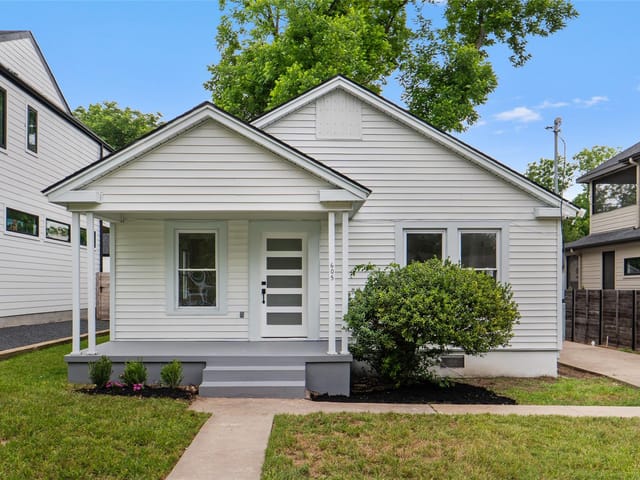
| 604 E 46th ST | $675K |
| 614 W 51st St | $650K |
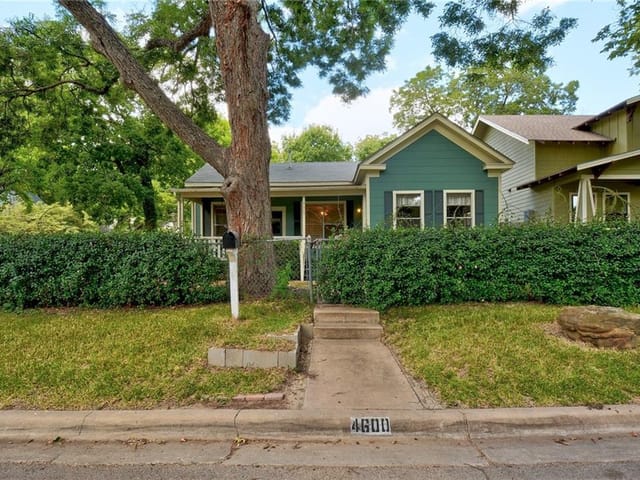
| 4600 AVENUE C | $450K |
Comparable homes that recently closed in this area
Neighborhood guide and local insights
Hyde Park was platted in 1891 as Austin's first planned suburban development, and it still has the original Moonlight Tower on Avenue G - one of only 15 surviving moonlight towers in the world and the only ones still in operation. That piece of infrastructure, unchanged for over a century, represents how Hyde Park relates to its own history. People do not just preserve old things here for show. They live in and around them every day. Hyde Park occupies a compact rectangle between Guadalupe on the west, Duval on the east, 38th Street on the south, and 45th on the north, immediately north of UT and about two miles from the Capitol. Downtown is a 10-minute drive or 15-minute bike ride. North Loop Boulevard along the northern edge has developed into a strip of vintage shops, record stores, and small restaurants. The I-35 corridor sits a few blocks east for highway access, though most residents orient their lives west and south. The housing stock makes Hyde Park architecturally distinct. Craftsman Bungalows account for roughly 40%, with low-pitched roofs, wide front porches, exposed rafter tails, and tapered columns. Victorian and Queen Anne styles make up 20%, with ornamental woodwork and bay windows. Tudor homes represent 15%, adding steep gables and decorative half-timbering. Most single-family homes range from 1,000 to 2,000 square feet on lots between 5,000 and 7,500 square feet - small by suburban standards but appropriate for 1890s design where front porches functioned as social space. Unrenovated bungalows start in the mid-$500s. Renovated homes sell between $750,000 and $1.2 million. Hyde Park falls within Austin ISD. Lee Elementary serves most of the neighborhood and benefits from active parent involvement. Lamar Middle School and McCallum High School complete the feeder pattern. McCallum has a well-regarded Fine Arts Academy drawing students districtwide. The proximity to UT creates informal educational benefits - kids grow up walking past the university and attending campus events. The lifestyle centers on front porches, coffee shops, and genuine walkability. Morning routines start at Epoch Coffee on North Loop or Quack's 43rd Street Bakery. Hyde Park Bar and Grill - the one with the giant fork sculpture - has been an institution since 1982. Foreign and Domestic brings ambitious seasonal cooking to North Loop. Asti Trattoria handles Italian with a rewarding wine list. Shipe Park serves as the central gathering space with a pool, playground, and basketball courts. Shoal Creek Trail and Pease Park provide jogging routes through old-growth pecan trees. Hyde Park competes on character, location, and walkability rather than square footage. Compared to Cherrywood, it offers more architectural variety and a stronger commercial corridor. Compared to Bouldin Creek and Zilker, it is generally less expensive per square foot with comparable walkability. The tradeoffs are real - lots are small, parking is limited, many homes lack garages, and the historic overlay means exterior changes require approval. Hyde Park is for buyers who prioritize neighborhood character over square footage and modern amenities. It fits UT faculty who want to walk to campus, creative professionals who draw energy from visible history, and couples who would rather live in 1,400 square feet of Craftsman charm than 3,000 of suburban drywall. If you need space, a pool, or proximity to the tech corridor, look elsewhere. But if you want to know your baristas by name and live in a house with stories in its walls, there is no better address in Austin.
Looking for more homes in Hyde Park?
Contact an Expert →Best Match
Balanced against price, location, and layout so nearby lookalikes rise first. Similar properties in Hyde Park
Active listings near 512 E 46th St