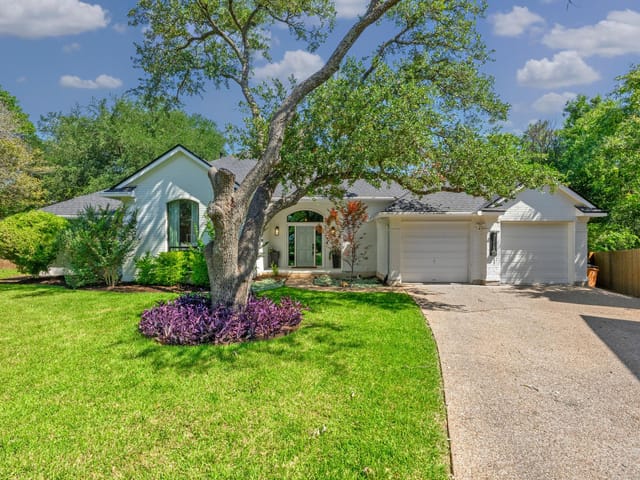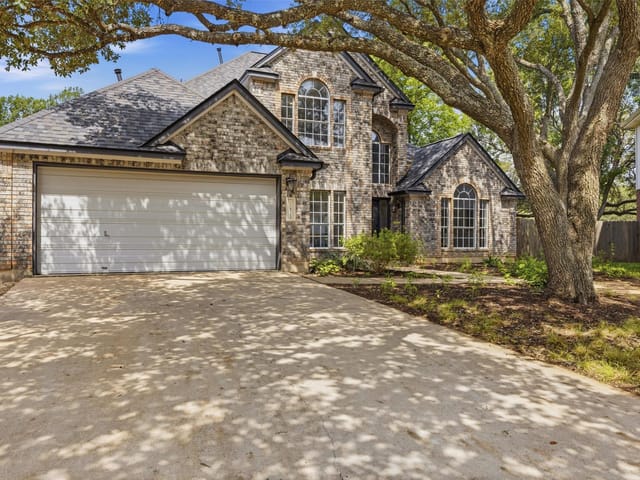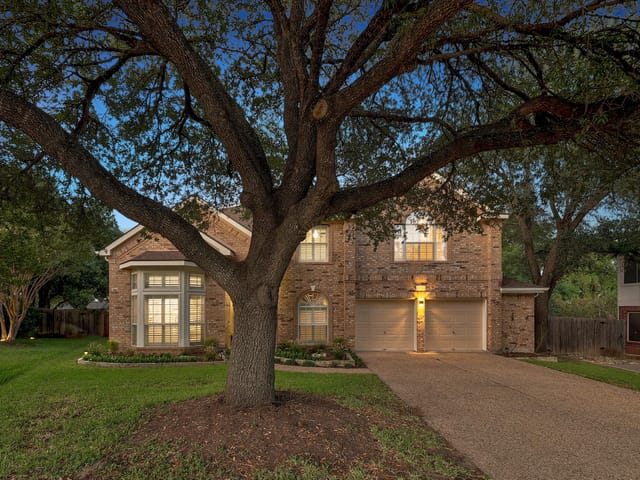
This property is no longer actively listed. We can help you find similar homes currently for sale, notify you if this property relists, or explore off-market opportunities in the area.
Why you're seeing this property: Unlike major portals that hide off-market listings, we maintain the most comprehensive Austin property database. View market history, neighborhood data, and discover similar homes currently for sale. #1 Austin Realtor Team 2024.
5 bed, 4 bath, 3,568 sqft on 0.19 acres in Circle C Ranch. Austin, TX 78739. Last listed at $1,130,000, sold February 24, 2025. Austin ISD.
About This Home
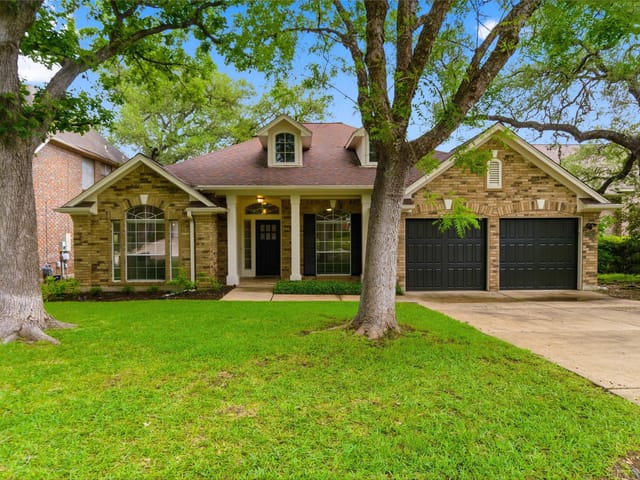
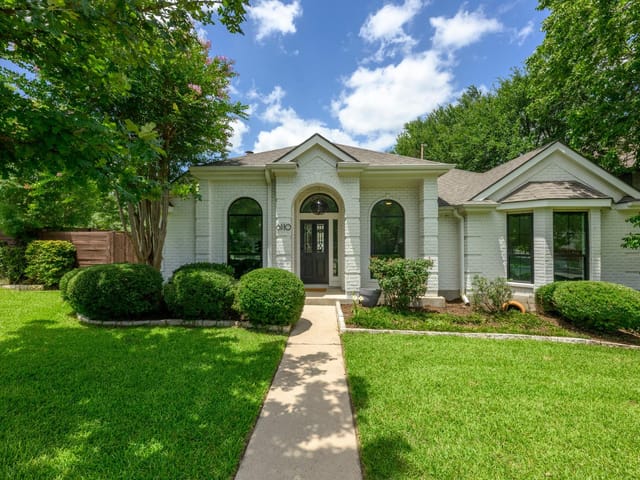
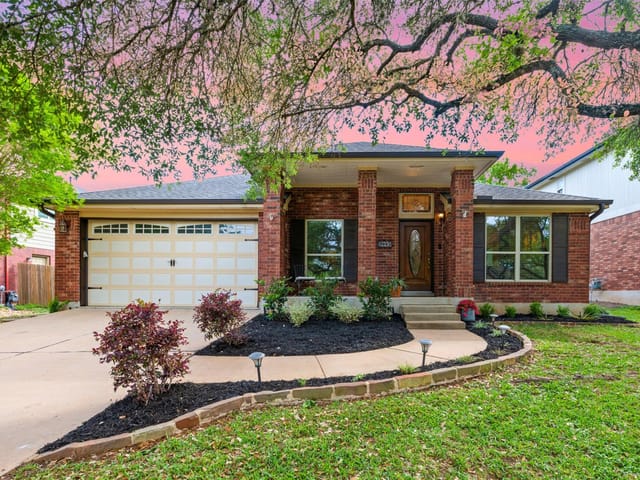
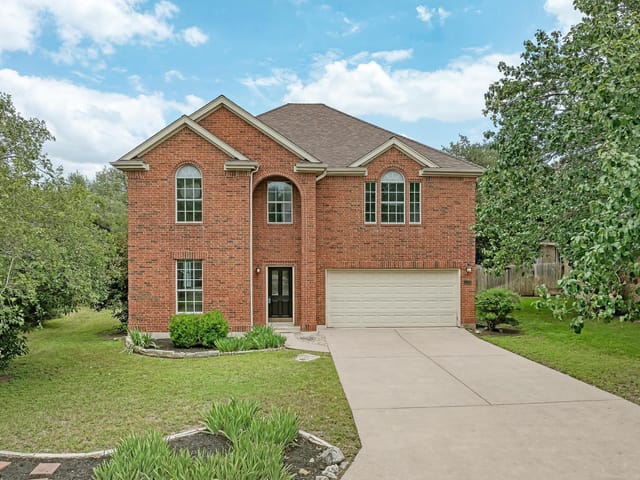
Discover this beautifully updated and move-in ready home in the heart of Circle C, designed to impress with its open floor plan, soaring high ceilings, and abundant natural light. The ground floor features warm hardwood floors, a stunning centerpiece staircase with elegant wood details, and a two-story ceiling that creates a sense of grandeur. The updated kitchen and remodeled bathrooms boast designer finishes, with the luxurious primary bathroom offering a freestanding pedestal tub, a walk-in shower, and sleek modern fixtures. Upstairs, you’ll find three spacious bedrooms—two sharing a Jack-and-Jill bathroom, along with an additional full bathroom—and a versatile media/game room perfect for family fun. Step outside to enjoy the low-maintenance artificial turf, a charming gazebo for outdoor entertaining, and a sparkling pool and spa for the ultimate summer relaxation. This home is truly an entertainer's dream and a rare find in one of Austin’s most desirable family neighborhoods. Don’t miss your chance to call this stunning property your own!
Circle C Ranch has 3.2 miles of dedicated cycling trail that no car has ever been allowed to touch. The Veloway is a paved loop exclusively for cyclists and inline skaters, winding through Hill Country terrain on the southern edge of the neighborhood. It is the kind of amenity that sounds like a city planning fantasy but has been operating since 1992, and it tells you something important about what this community prioritizes: outdoor access, family infrastructure, and the kind of thoughtful planning that most master-planned neighborhoods only promise.
Circle C sits in southwest Austin in the 78739 zip code, roughly bounded by MoPac Expressway to the east, Slaughter Lane to the north, Escarpment Boulevard to the west, and the Lady Bird Johnson Wildflower Center to the south. Downtown Austin is about a 20-minute drive via MoPac. The Southwest Parkway provides a secondary route that connects to Highway 71 and the Hill Country corridor. The Escarpment Village shopping center at the neighborhood's edge handles most daily errands, and a second commercial cluster at William Cannon and MoPac adds more options. Bee Cave, Dripping Springs, and the Hill Country Galleria are all accessible within 15 to 20 minutes heading west.
The housing stock spans about four decades of development. The original phase of Circle C launched in 1986, and the Traditional Texas Suburban homes from that era through 2000 make up roughly 40 percent of the inventory. These are typically 2,000 to 3,500 square feet on quarter-acre to half-acre lots, with brick or stone exteriors and mature landscaping. Hill Country Contemporary homes built between 2000 and 2015 account for another 25 percent, bringing limestone accents, metal roofing, and more open floor plans. Newer production-builder sections from 2010 through 2022 add modern designs at a 20 percent share. Townhomes, patio homes, and a small number of custom estates round out the mix. Pricing runs from the mid $400s for older homes or townhomes to around $1.2 million for larger updated homes on premium lots. Circle C delivers strong value compared to Westlake or Barton Creek for families who want space and schools without the seven-figure entry point.
The neighborhood is served by Austin ISD, and the school situation is one of the primary reasons people move here. Clayton Elementary, Kiker Elementary, and Mills Elementary all serve different sections of the community, and each maintains strong parent involvement and academic performance. Small Middle School and Bowie High School handle the upper grades. Bowie is one of the larger high schools in Austin ISD but maintains a strong academic reputation, particularly in STEM programs and athletics. The combination of neighborhood-feel elementary schools and a well-resourced high school makes Circle C one of the most consistently popular family destinations in south Austin.
The daily routine in Circle C revolves around the outdoors. Morning runners and cyclists hit the Veloway or the Slaughter Creek Trail before work. The Lady Bird Johnson Wildflower Center, which sits at the southern tip of the neighborhood, provides 284 acres of native Texas landscape for walking, photography, and events. Grey Rock Golf Club offers a public course within the community. The Circle C Swim Center and community pool system stays busy from April through October. For dining, Keepers Coastal Kitchen and District Kitchen anchor the Escarpment Village corridor with sit-down options that have raised the local restaurant scene well beyond the chains that typically dominate master-planned neighborhoods. Oasthouse Kitchen and Jack Allen's Kitchen are both a short drive north. The Alamo Drafthouse on Slaughter Lane handles movie nights, and the Wildflower Center hosts seasonal festivals and concerts.
Circle C holds a distinct position in Austin's suburban market. It is less expensive than Westlake or Barton Creek but offers comparable school quality within Austin ISD rather than requiring the premium of Eanes or Lake Travis districts. Compared to Shady Hollow and Bauerle Ranch to the east, Circle C has better trail infrastructure and more neighborhood amenities. Compared to Belterra further southwest, it provides a significantly shorter commute and more established commercial options. The neighborhood competes most directly with Sendera and Legend Oaks on the south side, though Circle C's Veloway, Wildflower Center proximity, and deeper inventory give it an edge in the family market.
Circle C is the right choice for families who want genuine outdoor amenities and good Austin ISD schools without paying West Austin luxury prices. It works for dual-income households in southwest Austin's tech corridor, families who want neighborhood stability, and active adults who will use the trails and pool system. If your priority list starts with schools, outdoor access, and community, Circle C delivers on all three at a price point that still makes financial sense.
School District: Austin ISD
View Circle C Ranch neighborhood guide- Property Type
- Residential
- Year Built
- 1990
- Lot Size
- 0.19 acres
- Price / Sq Ft
- $317
- HOA
- $934/year
- Garage
- 2 spaces
- Pool
- Yes
Listing information last updated February 26, 2025.
Listed by Compass RE Texas, LLC
MLS# 6614346 • Closed
IDX inquiries: Keenan Group at Compass · (512) 415-7653
Properties displayed may be listed or sold by various participants in the MLS.
Highlights
Facts & Features
Interior
- Ceiling Fan(s)
- Chandelier
- Quartz Counters
- Eat-in Kitchen
- Entrance Foyer
- Kitchen Island
- Multiple Dining Areas
- Multiple Living Areas
- Open Floorplan
- Primary Bedroom on Main
- Recessed Lighting
- Smart Thermostat
- Soaking Tub
- Dishwasher
- Disposal
- Gas Cooktop
- Microwave
- Oven
- Double Oven
- Free-Standing Refrigerator
- Stainless Steel Appliance(s)
- Carpet
- Tile
- Wood
- Heating
- Central
- Cooling
- Central Air
- Fireplaces
- 1
Exterior & Lot
- Gutters Full
- Brick
- Concrete
- Frame
- Landscaped
- Level
- Privacy
- Wood
- Slab
- Front Porch
- Patio
- Roof
- Composition
- Lot Size
- 0.19 Acres
- Garage
- Garage Door Opener
- Garage Faces Front
- Kitchen Level
- Garage Spaces
- 2
- Pool
- Yes
Financial
- HOA Fee
- $934 / year
- Original List Price
- $1,249,000
- Price per Sq Ft
- $317
Utilities
- Electricity Connected
- Natural Gas Connected
- Sewer Connected
- Water Connected
- Water Source
- Public
- Sewer
- Public Sewer
Transaction History
1 record on file
Every recorded listing, sale, and lease at 10844 Redmond RD, whoever represented it.
- SoldFebruary 24, 2025Listed at: $1,249,000MLS 6614346
Prices shown are list prices. Closed sale prices are available to registered clients in accordance with ACTRIS rules.
Explore this area
Price & Listing History
Listing timeline with current price, original ask, and market time.
- Current list
- $1,130,000
- Original list
- $1,249,000
- Price movement
- $119K reduction
- Listed / DOM
- Jan 17, 2025
Tax Record
Public record data from county appraisal records. Market value can differ from assessed value.
- Assessed Value
- $943,575
- Assessment Year
- 2025
- Year Built
- 1990
- Parcel ID
- 000000340681
| Year | Taxes | Total Assessment | Land | Additions |
|---|---|---|---|---|
2025-3.5% | — | $943,575 | — | — |
2024+2.0% | — | $977,622 | $325,000 | $677,654 |
2023+53.2% | — | $958,552 | $325,000 | $652,622 |
2022 | — | $625,874 | $325,000 | $633,552 |
Zoned Schools
Bowie
Gorzycki
Kiker
Zoned assignments come from the property school fields available to us. District context schools are shown only when an assigned tier is missing. Contact the school district directly to verify current boundaries and enrollment eligibility.
Excluded from this estimate: property taxes and home insurance. Each requires verified amount, cadence or unit, source, and as-of details.
HOA source: MLS Grid / Unlock MLS, as of 2026-04-25T02:51:50.833075+00:00; normalized from annual dues.
20% ($226K)
Adjustable assumption - not a lending recommendation.
$1,130,000
Luxury property intelligence
Keenan Market Position
A sourced read on Circle C Ranch pricing, timing, and property scale. No automated valuation claim.
List price
$1,130,000
Price per sqft
$317/sqft
Vs. Neighborhood guide reference price
+34.1%
$842.5K · Circle C Ranch neighborhood guide · reference price
Days on market
Not available
Original to current
$119K reduction
$1.2M original
Active inventory context
24 listings
Price Position in Circle C Ranch
Listed 34% above the Circle C Ranch neighborhood guide reference price. Circle C Ranch neighborhood guide · reference price.
Source: MLS Grid / Unlock MLS and Keenan Group review as of Apr 25, 2026.
Request Private Market AnalysisConnect 10844 Redmond Rd to the Austin Market
Circle C Ranch Neighborhood Guide
Lifestyle, schools, market context, and homes in Circle C Ranch
Circle C Ranch Homes for Sale
Active listings and buyer search context in Circle C Ranch
78739 ZIP Guide
ZIP-level neighborhoods, schools, lifestyle, and Austin market context
Austin ISD Schools
District guide, nearby schools, and homes by attendance area
Austin Home Valuation
Private Austin CMA, TCAD context, and pricing strategy
Seller Resources
Pricing, prep, launch timing, and Compass marketing strategy
Keenan Group Results
#1 ABOR Team 2024 with $1B+ career sales volume