If you own a home in Austin, you have probably checked Zillow at least once to see what it says your property is worth. The Zestimate is right there on the page - a single number that looks authoritative. But in Austin's luxury market, that number is often wrong by hundreds of thousands of dollars.
This is not a hit piece on Zillow. The Zestimate is a useful tool in certain contexts. But understanding where it fails - and why - helps buyers, sellers, and homeowners tracking equity make better pricing decisions.
What a Zestimate Actually Is
A Zestimate is an Automated Valuation Model (AVM). Zillow's algorithm pulls from public property records, MLS listing data, tax assessments, and user-submitted information to generate an estimated market value for nearly every home in the United States.
The model uses machine learning trained on millions of transactions nationally. It considers square footage, lot size, bedroom and bathroom count, year built, recent sales in the area, and dozens of other data points that can be quantified from public records.
Zillow publishes its own accuracy metrics. Nationally, the median error rate is approximately 2.4% - meaning half of Zestimates land within 2.4% of the eventual sale price, and half miss by more than that. For off-market homes (not currently listed), the median error jumps to around 7.5%.
Those are national medians. In Austin's luxury segment, the error rates are significantly higher.
Where Zestimates Fail in Austin
School District Boundaries
The Eanes ISD boundary line runs through several Austin neighborhoods. On one side, homes feed into Eanes schools (Barton Creek Elementary, Hill Country Middle, Westlake High). On the other side, identical-looking homes feed into AISD.
The pricing impact: $300,000 to $500,000 for otherwise comparable homes across the street from each other. A 3,200 square foot home in the Eanes side of Far West might trade at $1.1M while the same floor plan on the AISD side trades at $750K.
Zillow's algorithm knows school districts exist, but it cannot weight this boundary effect with the precision a local agent applies. The algorithm treats school quality as one of many inputs. For Austin buyers shopping by school zone, it is often the single most important factor.
Renovation Quality
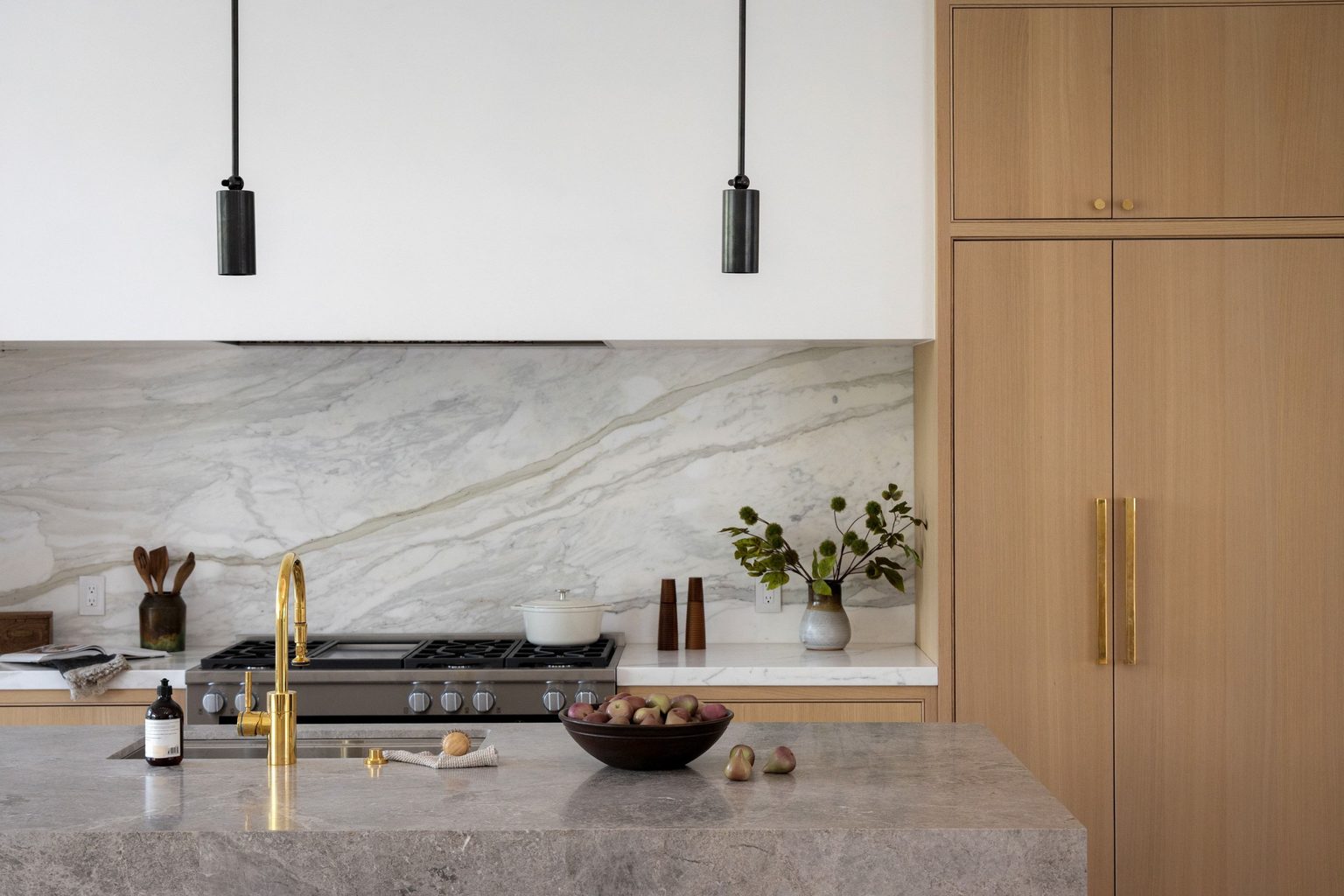
A kitchen renovation can cost $50,000 or $200,000. Both show up in Zillow's data the same way - or not at all, if no permit was pulled. The algorithm cannot distinguish a builder-grade flip from a custom renovation with Waterworks fixtures, quartzite countertops, and a La Cornue range.
In Tarrytown and Old Enfield, where many homes are 1950s-era originals on expensive lots, the gap between an unrenovated home and a fully renovated one can exceed $500,000. Zillow sees the same square footage, same lot, same year built.
Waterfront and Dock Permits
Lake Austin waterfront property values depend heavily on whether the home has a permitted boat dock. LCRA (Lower Colorado River Authority) dock permits are limited and difficult to obtain. A waterfront lot with a grandfathered dock permit can command $500,000 to $1.5 million more than an identical lot without one.
Zillow has no field for "dock permit status." The algorithm cannot distinguish a waterfront home with deep-water dock access from one where the shoreline is too shallow or where LCRA will not approve a permit.
Lot Slope, Views, and Buildable Area
Austin's Hill Country terrain means two lots of identical acreage can have wildly different usable area. A flat half-acre lot in Northwest Hills is worth significantly more than a steep, heavily treed half-acre that limits construction to a small building pad.
View quality is another variable the algorithm misses. A home with a 180-degree Hill Country panorama commands a 15-25% premium over a comparable home with tree-obscured or no view. Zillow cannot see what you see from the back porch.
Custom Design and Architectural Significance
Austin has a growing inventory of architect-designed custom homes. A home designed by Dick Clark Architecture or McKinney York commands a premium that the algorithm cannot quantify. Similarly, a mid-century modern by local legend A.D. Stenger carries provenance value that shows nowhere in public records.
The Zestimate treats all 3,500 square foot homes in a neighborhood as roughly equivalent. A custom-designed home with thoughtful floor plan, premium materials, and architectural intent is not equivalent to a production builder spec home of the same size.
Thin Luxury Comp Pools
In many Austin luxury neighborhoods, only 3-8 homes sell per year above $3M. The algorithm needs volume to be accurate. When the training data in a micro-market consists of a handful of sales - each with unique features requiring significant adjustment - the model struggles.
In neighborhoods like Rob Roy, Davenport Ranch, or the Pennybacker Ridge enclave, Zestimates can miss by $500K-$1M+ simply because there is not enough comparable transaction data to train on locally.
I see Zestimates miss by $300,000 to $800,000 on Westlake Hills properties regularly. Last month, a client showed me their Zestimate at $2.1M. We listed at $2.65M based on our CMA and closed at $2.7M. The algorithm could not account for the full Barton Creek greenbelt frontage, the Eanes school zone, or the $400K kitchen renovation completed in 2024.
When a Zestimate IS Useful
The Zestimate is not worthless. It has legitimate uses:
- Directional check. If you have no idea whether your home is worth $500K or $800K, the Zestimate gets you in the right neighborhood (usually).
- Trend tracking. Watching your Zestimate over 12-24 months shows market direction, even if the absolute number is off.
- Filtering searches. When browsing homes to buy, Zestimates help you gauge whether a listing price is roughly in line with algorithmic expectations.
- Non-luxury homes. For standard 3/2 homes in subdivisions with high transaction volume and homogeneous inventory, Zestimates are reasonably accurate.
The tool works best when homes are similar to many other homes that have recently sold nearby. It works worst when a property is unique, complex, or in a thin market.
Zestimate vs Keenan Group CMA: A Comparison
| Factor | Zestimate | Keenan Group CMA |
|---|---|---|
| Data source | Public records, MLS feeds, user submissions | MLS, TCAD, agent preview, interior inspection |
| Adjustments | Algorithmic, based on national model | Line-item, property-specific, agent-verified |
| Local knowledge | None (national algorithm) | 25+ years Austin market, 1,000+ transactions |
| Interior condition | Cannot assess | In-person or photo-based evaluation |
| School boundary precision | Approximated | Exact boundary, buyer behavior data |
| Waterfront/dock | Not factored | LCRA permit status, shoreline grade, water depth |
| View quality | Not factored | Assessed on-site, premium quantified from comps |
| Custom features | Not factored | Individual valuation per feature |
| Turnaround | Instant | 24-48 hours (standard), 3-5 days (luxury) |
| Cost | Free | Free (from Keenan Group) |
| Accuracy in luxury ($2M+) | Often 10-25%+ error | Typically within 3-5% of sale price |
What to Use Instead
For pricing decisions - listing, buying, refinancing, or planning renovations - a CMA from a local luxury agent replaces the Zestimate entirely.
A Comparative Market Analysis starts with the same data Zillow uses (recent sales, square footage, lot size), then adds layers the algorithm cannot replicate:
- Hand-selected comps that match your home's school zone, condition, and feature set
- Line-item adjustments for every material difference (pool, view, lot grade, renovation quality)
- Active competition analysis showing what you are competing against right now
- Market timing context including absorption rate and buyer demand signals
- Interior assessment from someone who has actually walked through the home
For a detailed look at how a CMA is built, read our CMA methodology guide.
What to Do Next
- Check your Zestimate as a starting point. Note it, but do not anchor to it.
- Compare it to your TCAD value. If they diverge significantly, read our TCAD vs market value guide to understand why.
- Request a free CMA. Keenan Group provides complimentary valuations for Austin homeowners - no obligation. Request yours here.
- See our track record. Review our results across 1,000+ Austin transactions to understand the experience behind our pricing recommendations.
Have questions about your home's value? Contact us directly or request an instant home valuation. We respond within 24 hours with a preliminary range backed by local comp data, not a national algorithm.
Interested in Tarrytown?
Get a confidential market brief for Tarrytown with current inventory, pricing, and strategy recommendations from Austin's #1 team.